
Over the past several years, Maui’s real estate and vacation rental markets have experienced one of the most significant economic and regulatory shifts in modern Hawaiʻi history.
What we are seeing today is not simply a traditional market correction. What makes today’s environment unique is that Maui is simultaneously navigating macroeconomic pressure, post-pandemic behavioral shifts, and a rapidly evolving regulatory landscape — all at the same time.
This has fundamentally changed how Maui real estate is being valued, underwritten, and operated.
Maui is navigating a convergence of:
- rising interest rates,
- inflationary pressures,
- insurance cost increases,
- global economic uncertainty,
- evolving tourism trends,
- and major policy discussions surrounding short-term rentals and housing.
For buyers, sellers, and vacation rental owners alike, understanding these changing dynamics has never been more important.
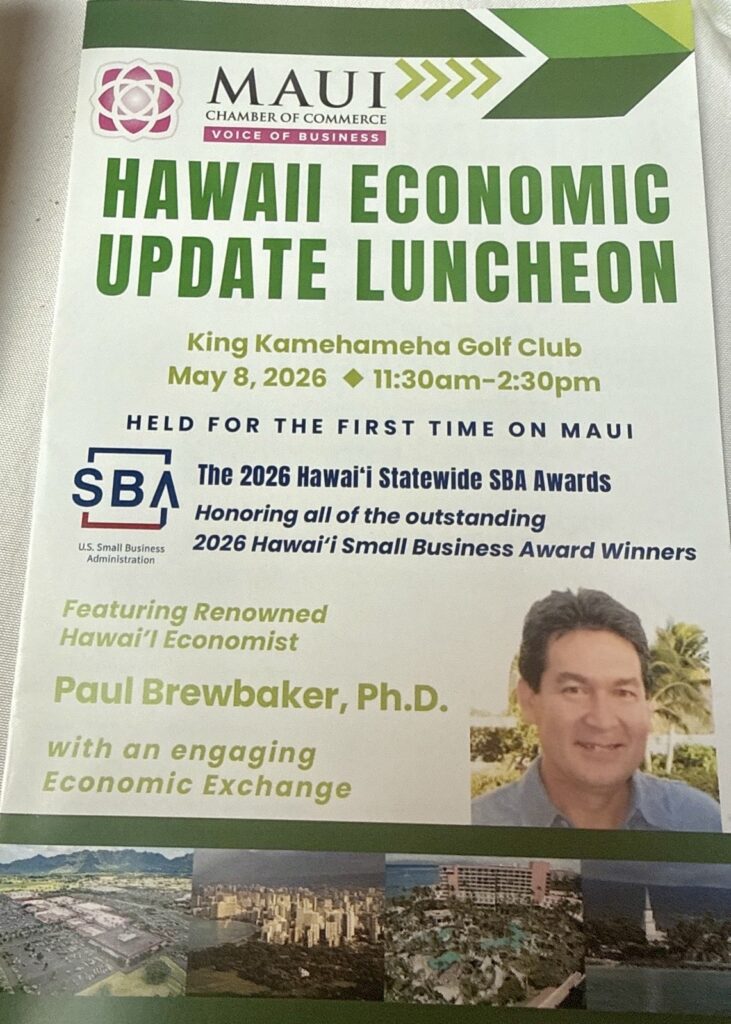
Recently, economist Dr. Paul Brewbaker presented an economic outlook to the Maui Chamber of Commerce, discussing the future of Hawaiʻi’s economy, Maui tourism, inflation, oil shocks, mortgage rates, remote work migration, and the profound market impacts tied to Maui’s ongoing short-term rental policy discussions.
Many of the themes discussed directly align with what we are actively seeing across the Maui real estate and vacation rental marketplace every day.
One of the most important points raised during the economic presentation was that asset markets adjust to expectations long before policy implementation occurs.
In Maui’s case, uncertainty surrounding future short-term rental policy immediately altered investor behavior, condominium pricing, inventory levels, and risk perception — even though many proposed changes remain years away from implementation.
In other words: Markets do not wait for implementation. Markets price uncertainty first.
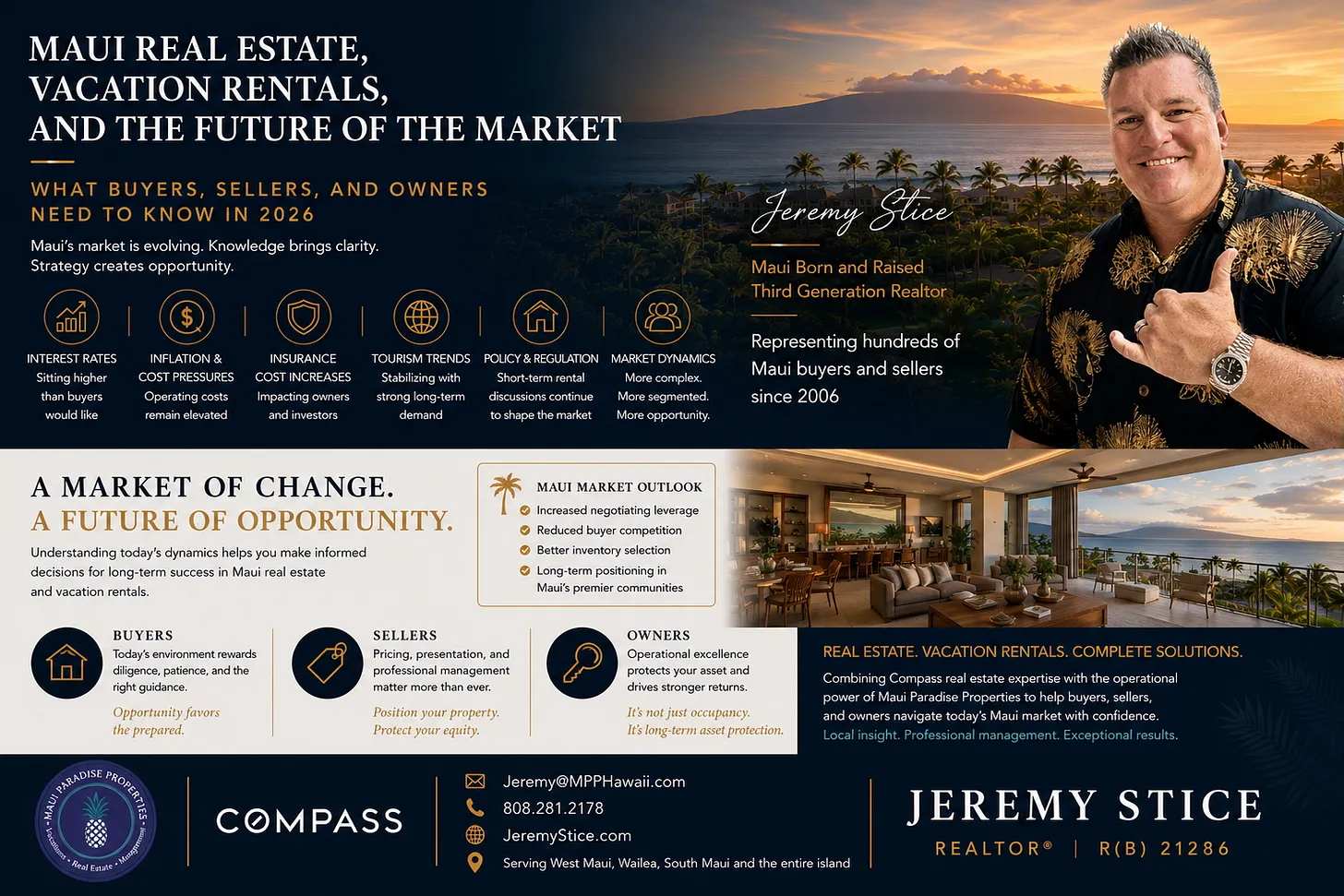
As a third-generation Maui born-and-raised Realtor serving Maui since 2006, I have represented hundreds of buyers, sellers, and vacation rental owners throughout changing market cycles across West Maui, Wailea, Kapalua, Kaanapali, Honua Kai, Hoʻolei, and many of Maui’s premier resort communities.
In addition to my work through Compass Real Estate, I also work closely alongside Maui Paradise Properties, one of Maui’s leading vacation rental management companies, overseeing approximately 700 vacation rental properties, in addition to long-term rentals and second-home management, island-wide.
This unique combination of real estate brokerage, operational vacation rental management, owner relations, and regulatory involvement provides an unusually comprehensive perspective into the real-time challenges and opportunities impacting Maui property owners today.
I currently serve on the board of the Hawaii Mid and Short-Term Rental Alliance, previously served as President of the Maui Vacation Rental Association for two years before merging this entity into HIMAST, and have also served for more than five years on the Government Affairs Committee for the Realtors Association of Maui. MPP is on many of these committees in addition to the Chamber of Commerce and the National Right to Rent group. We represent and always fight for our owners’ rights.
These roles have provided direct involvement in many of the legislative, operational, and economic discussions shaping Maui’s housing and vacation rental landscape today.
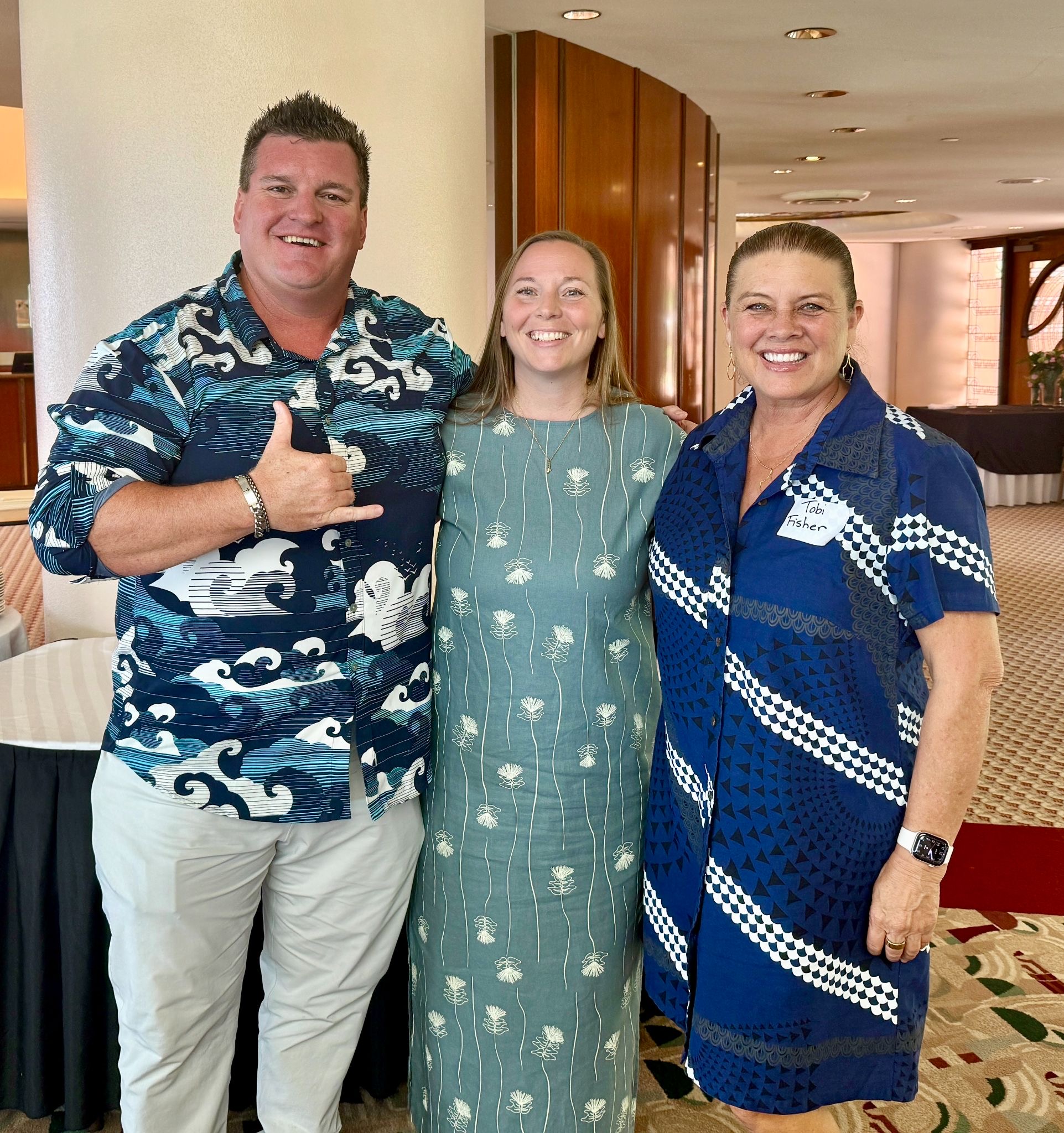
Myself, Caitlin Miller (local business owner and executive director of HIMAST), and my long time friend and Maui multiple business owner, Tobi Fisher.
Myself, Caitlin Miller (local business owner and executive director of HIMAST), and my long time friend and Maui multiple business owner, Tobi Fisher.
Maui’s “Negative Resilience Trap”
One of the more important themes discussed during the presentation was the concept of a “negative resilience trap” — where repeated shocks and uncertainty prevent an economy from fully returning to prior trend performance.
Maui has faced multiple overlapping disruptions in recent years:
-
COVID-19
-
Recent flodding from Kona Low storms
-
the Lahaina fires
-
inflation and rising interest rates
-
aviation cost uncertainty
-
and ongoing short-term rental policy instability
These cumulative pressures have created slower tourism normalization, reduced investor confidence, and more cautious consumer behavior throughout the Maui economy.
Yet despite these challenges, Maui remains one of the most globally supply-constrained and emotionally desirable destinations in the world — which is precisely why sophisticated long-term investors continue positioning themselves strategically during periods of uncertainty.
Maui’s Real Estate Market Has Become More Complex Than Ever
For years, Maui real estate was viewed primarily as:
-
a lifestyle investment,
-
a second-home destination,
-
a wealth preservation asset,
-
and for many owners, a strong-performing vacation rental investment.
While those fundamentals still exist, today’s market environment has become significantly more complex.
Maui property owners and buyers are now simultaneously evaluating:
-
mortgage rates,
-
insurance exposure,
-
operating costs,
-
tourism trends,
-
zoning classifications,
-
regulatory stability,
-
and long-term political risk.
In many ways, the Maui condo market and vacation rental market are now being underwritten differently than they were even five years ago.
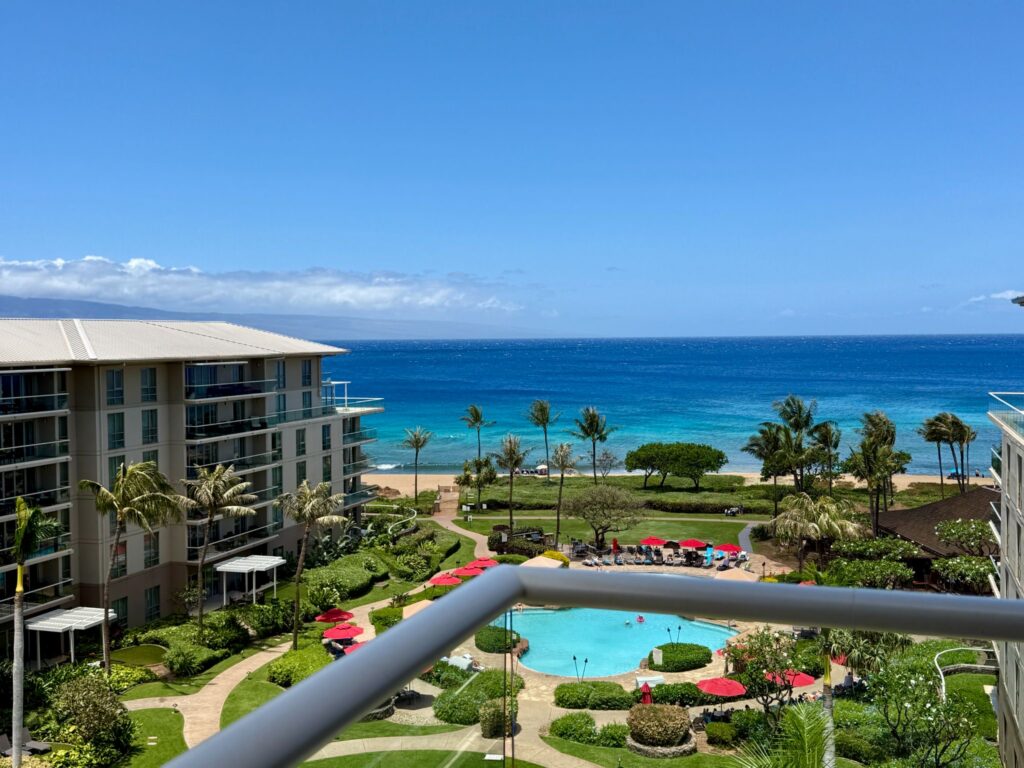
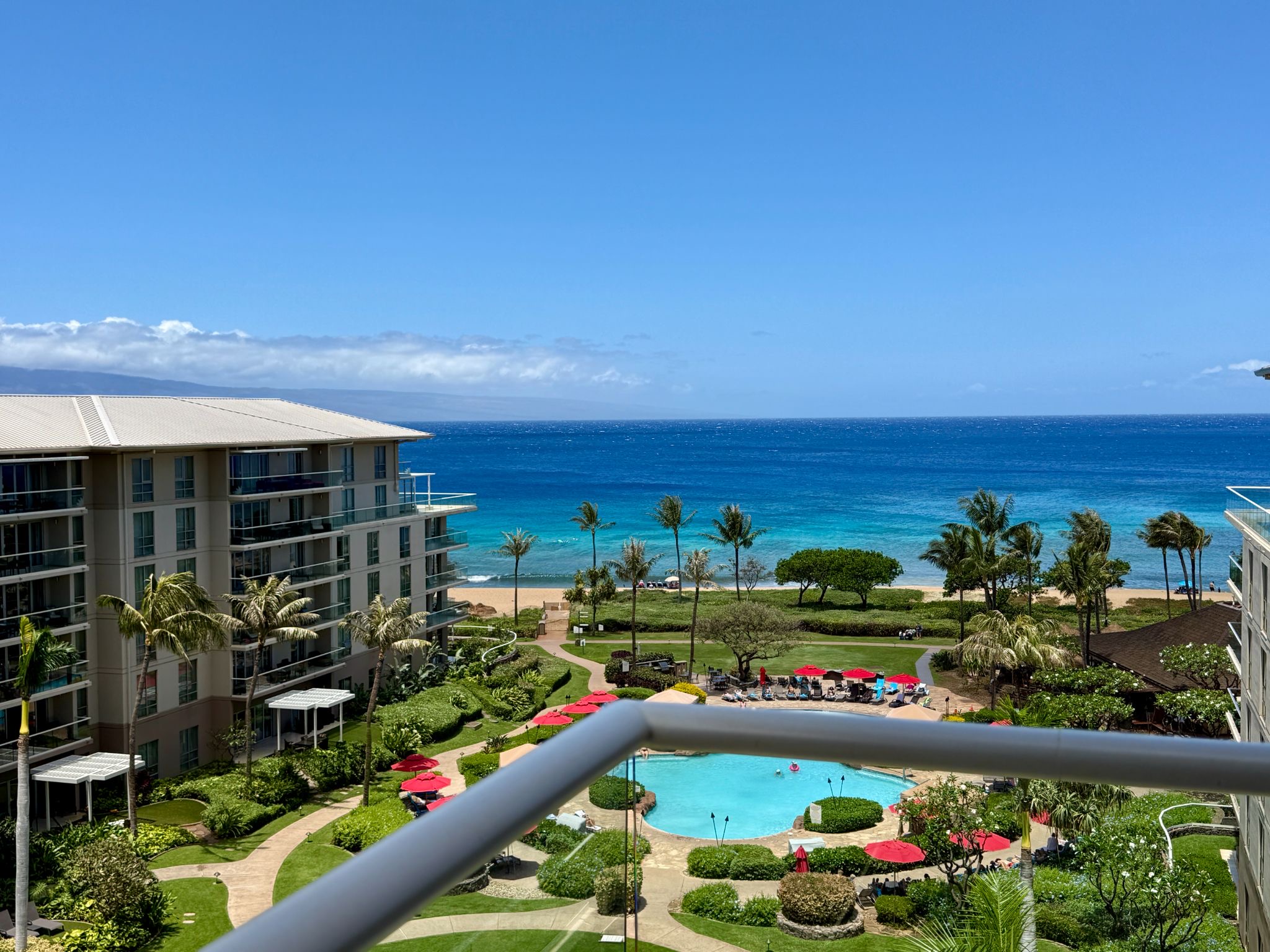
I am currently representing the buyers of Honua Kai Hokulani #741 — a hotel-zoned vacation rental property listed at $3.2M and now under contract.
I am currently representing the buyers of Honua Kai Hokulani #741 — a hotel-zoned vacation rental property listed at $3.2M and now under contract.
What makes this transaction especially noteworthy is the broader market context.
Less than three years ago, I sold an inferior unit within the same resort for nearly $1M more than where this property is expected to close today.
This buyer already owns another premium asset at Honua Kai and understands exactly how to capitalize on periods of market dislocation:
-
increased negotiating leverage,
-
reduced competition,
-
improved inventory selection,
-
and long-term positioning within one of Maui’s premier resort communities.
Sophisticated investors understand that periods of uncertainty often create the strongest long-term acquisition opportunities. Periods of market uncertainty often create the strongest opportunities for disciplined, well-informed buyers capable of thinking beyond short-term volatility.
The Impact of Maui Short-Term Rental Regulations and Bill 9
One of the most important themes discussed during the economic presentation was the impact Maui’s Bill 9 and broader short-term rental policy discussions have had on investor behavior and condominium valuations.
Regardless of political perspective, the market response itself has been very real. Markets react to expectations immediately—not simply to implementation. As uncertainty surrounding future short-term rental restrictions increased, many owners and investors began reassessing the long-term stability of Maui vacation rental income streams.
The result has included:
-
increased condo inventory,
-
longer days on market,
-
greater negotiation leverage for buyers,
-
pricing pressure in several segments,
-
and substantial shifts in investor sentiment.
Importantly, these effects have extended beyond apartment-zoned vacation rental properties. Even many hotel-zoned condos on Maui have experienced spillover pricing pressure as buyers evaluate long-term regulatory durability and overall Hawaiʻi investment risk.
Maui’s Market Is No Longer One Single Market
One of the biggest misconceptions in today’s environment is speaking about “the Maui market” as if it behaves uniformly.
It does not.
Today’s market is increasingly segmented between:
-
hotel-zoned resort properties,
-
legal short-term rental condos,
-
luxury second homes,
-
primary residences,
-
long-term rental investments,
-
and ultra-luxury legacy properties.
Each category now carries different:
-
operational realities,
-
financing considerations,
-
risk profiles,
-
and buyer motivations.
Sophisticated buyers today are analyzing these factors far more carefully than during the post-Covid buying surge:
-
zoning,
-
rental history,
-
HOA structure,
-
Sea-level rise
-
insurance exposure,
-
property management quality,
-
and long-term operational flexibility
Insurance Has Become a Primary Underwriting Variable
One of the largest shifts occurring across Maui real estate today is the growing role insurance costs now play in acquisition underwriting and long-term ownership strategy.
Rising master policy premiums, special assessments, carrier instability, and broader climate-risk considerations are increasingly impacting buyer decision-making, monthly ownership costs, and overall investment returns — particularly within condominium-based vacation rental properties.
For many buyers today, understanding insurance exposure has become just as important as understanding rental revenue potential.
Remote Work Permanently Changed Hawaii Housing Demand
One of the most significant long-term trends impacting Maui real estate remains the rise of remote and hybrid work. The pandemic permanently altered how many high-income professionals and entrepreneurs think about lifestyle, geography, and housing. Maui became one of the major beneficiaries of this shift.
The ability to work remotely fueled migration toward lifestyle-driven destinations offering:
-
climate,
-
outdoor living,
-
wellness,
-
flexibility,
-
and experiential quality of life.
This demand surge helped drive significant appreciation throughout Maui and the neighbor islands following COVID-19. Importantly, economists increasingly believe this trend represents a permanent structural shift—not a temporary anomaly.
Tourism Still Remains Foundational to Maui’s Economy
Tourism continues to play a critical role in Maui’s economy and broader community. Tourism is not a peripheral component of Maui’s economy — it is one of the foundational economic engines supporting local employment, small business activity, tax revenue, construction, transportation, restaurants, retail, and countless Maui families.
As Maui continues recovering from the Lahaina fires and broader economic disruption, maintaining a healthy, professionally operated visitor industry remains critically important to the island’s long-term economic stability.
Tourism supports:
-
local jobs,
-
restaurants,
-
transportation,
-
construction,
-
retail,
-
hospitality,
-
local businesses,
-
and tax revenue that supports public services throughout Maui County.
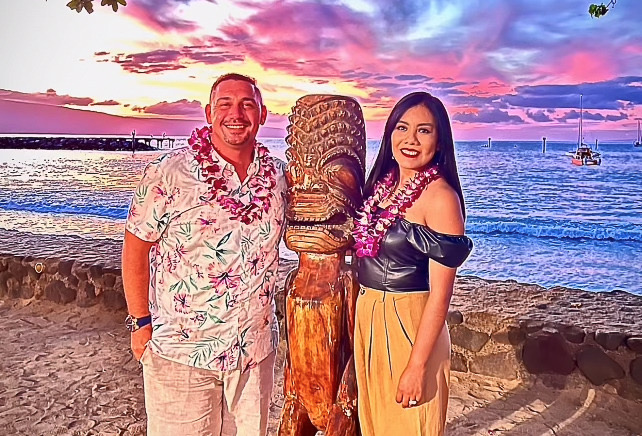
These are my dear friends Leo Szakacs-Kekona and Yuredi who own Blue Cleaning Company LLC. and clean over 30 vacation rental properties for our team. Leo was born and raised here on Maui like me and employs other hard-working locals of our Maui community.
In our internal studies, many locally based operational roles supporting professionally managed vacation rentals — including housekeeping coordination, maintenance, and field operations — can produce compensation levels significantly above many traditional hospitality-sector positions.
These operational ecosystems support a broad network of Maui-based small businesses, vendors, tradespeople, and local families.
Paul Brewbaker: “The structure of the economy dictates that tourism-oriented industries such as accommodation and food services, retail trade, arts, entertainment, and recreational services, and transportation services would express the largest shares of the decrease in tourism associated with the withdrawal of productive capacity.”
As Maui continues recovering from the devastating Lahaina fires and broader economic disruptions, maintaining Maui’s position as a world-class destination remains critically important for the island’s economic stability. For guests visiting Maui, this matters as well.
Today’s travelers are increasingly seeking:
-
professionally managed accommodations,
-
trusted local operators,
-
high-quality guest experiences,
-
safety,
-
consistency,
-
and authentic connections to the island.
At Maui Paradise Properties, our focus remains centered on delivering professionally managed, high-quality vacation rental experiences while simultaneously helping protect and preserve the long-term integrity of the real estate assets entrusted to us.
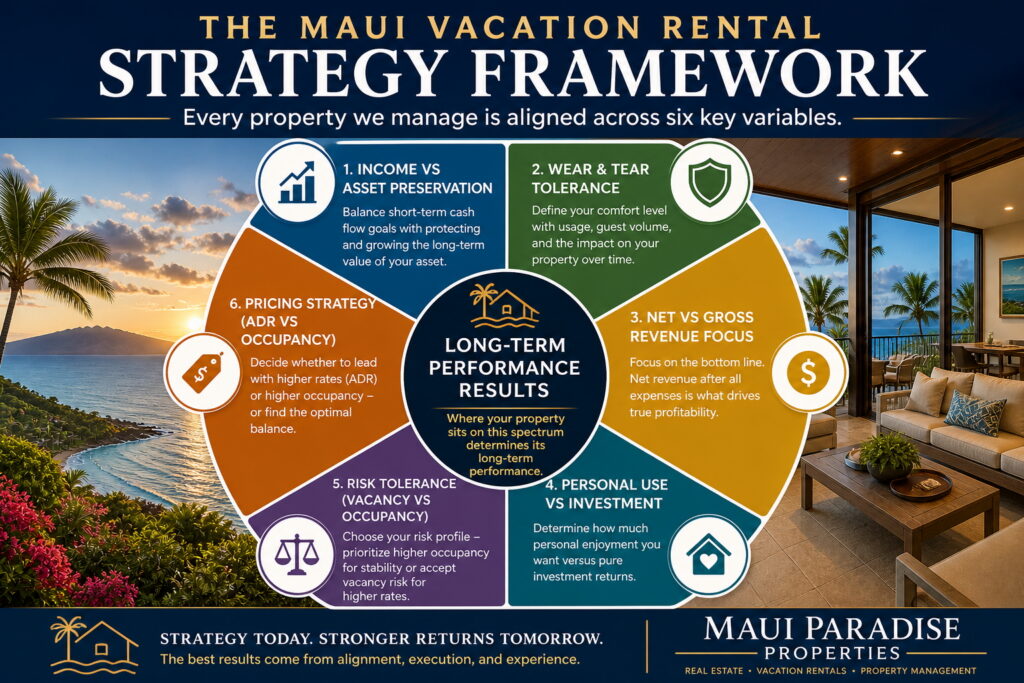
What Vacation Rental Owners Need to Understand Today
The modern Maui vacation rental environment requires far more than simply generating bookings.
Behind the Scenes: How Maui Paradise Properties Delivers Operational Excellence at Scale
Today’s successful vacation rental ownership requires:
-
sophisticated revenue management,
-
dynamic pricing strategy,
-
regulatory awareness,
-
proactive maintenance,
-
operational systems,
-
guest experience management,
-
safety and liability oversight,
-
marketing expertise,
-
and long-term asset protection.
At Maui Paradise Properties, our integrated approach includes:
-
professional revenue management,
-
in-house maintenance coordination,
-
design consultation,
-
operational auditing,
-
safety auditing,
-
marketing support,
-
direct booking strategies,
-
and comprehensive owner communication systems.
As discussed in Luxury Vacation Rentals in Maui Require a Different Strategy, the objective is long-term asset protection, operational excellence, and sustainable performance.
What Buyers Should Understand About Maui Real Estate in 2026
For buyers, today’s environment is creating both complexity and opportunity. I recently further discussed this in: Maui Vacation Rental Market Outlook: Why 2026 Is Shaping Up as a Strategic Buying Window
Periods of uncertainty often create opportunities for disciplined buyers who understand:
-
long-term fundamentals,
-
replacement costs,
-
zoning,
-
operational realities,
-
and risk-adjusted value.
Maui remains one of the most supply-constrained and globally desirable destinations in the world. But buyers today require significantly more due diligence and strategic guidance than in previous market cycles. Understanding vacation rental legality, operational viability, property management quality, and future regulatory exposure has become increasingly important.
What Sellers Need to Understand
For sellers, pricing strategy, operational organization, and market positioning matter more than ever. Another previous post: Maui Vacation Rental Market Outlook 2026: Trends, Regulations & What Owners Need to Know
Today’s buyers are:
-
more analytical,
-
more cautious,
-
and more focused on risk assessment.
Properties that have the following qualities struggle to gain traction:
-
overpriced,
-
poorly presented,
-
operationally disorganized,
-
or lacking strong documentation
Meanwhile, properties with these qualities continue to generate meaningful buyer interest:
-
strong presentation and quality,
-
professional management,
-
quality financial documentation,
-
consistent maintenance,
-
and realistic pricing
Maui’s Long-Term Outlook
Despite current uncertainty, Maui remains one of the most unique and desirable real estate markets in the world.
There will continue to be global demand for:
-
luxury Maui real estate,
-
oceanfront properties,
-
hotel-zoned condos,
-
professionally managed vacation rentals,
-
and lifestyle-driven ownership opportunities.
However, moving forward, the market will likely reward these components far more than speculation alone:
-
sophistication,
-
operational excellence,
-
strategic planning,
-
and experienced local guidance
Closing Thoughts
The Maui market is no longer driven by speculation alone. Today’s environment rewards operational sophistication, regulatory awareness, strategic underwriting, professional management, and long-term thinking.
Buyers, sellers, and vacation rental owners who adapt to these realities will likely be positioned far more successfully than those relying on outdated assumptions from the post-pandemic boom years.
At Maui Paradise Properties, our focus remains on helping clients navigate these evolving market conditions with professionalism, operational expertise, long-term perspective, and deep local knowledge.
Because in today’s environment, acquisition strategy and asset protection are no longer separate conversations — they are fundamentally intertwined.
Mahalo for reading, sharing, and subscribing!