
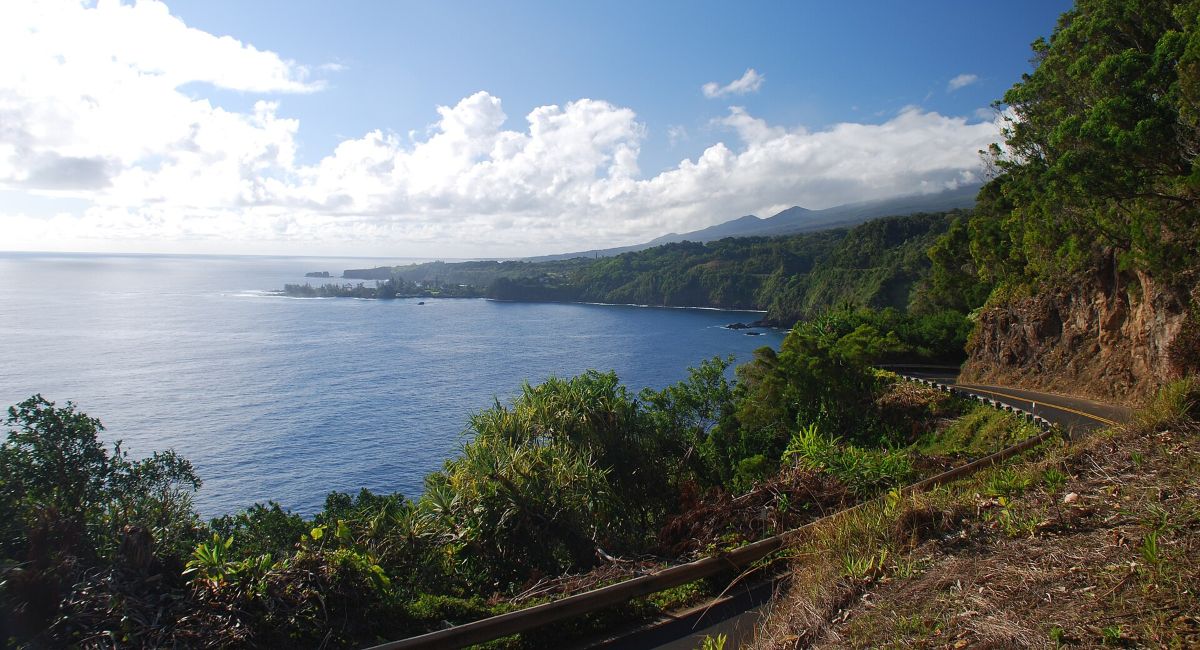
The Road to Hana is commonly described as a 64-mile scenic drive from Kahului to Hāna, with many visitors continuing south to Kīpahulu for the Pipiwai Trail and the Pools of ʻOheʻo. This Road to Hana guide covers every mile of it, from where to start to what to pack. The drive itself takes about 2.5 hours without stopping, but nobody drives it without stopping.Budget a full day for the drive if you plan to stop often, hike, or visit Waiʻānapanapa and Kīpahulu.
What you need to know before you go:
- The Hana Highway is widely described as having 620 curves and 59 bridges, many of them one-lane, and most self-drive visitors should plan on a full day once stops are added.
- Start early, ideally before 8 AM from wherever you are staying on Maui — if you are coming from Kaʻanapali or Lahaina, add 50 to 65 minutes just to reach the highway start at Paʻia
- Popular stops include Twin Falls, Keʻanae Peninsula, Waiʻānapanapa State Park, and the Pipiwai Trail in Kīpahulu.
- Cell service becomes unreliable along much of the route, so download offline maps before you leave.
How Long Does the Road to Hana Take — and Is It Worth a Full Day?
The drive time depends on where you start and how far you go, but the Road to Hana is usually experienced as a full-day outing rather than a quick point-to-point drive. Yes, it is worth a full day — and for most visitors, it is the single most memorable thing they do on Maui.
The real question is how long it takes to reach the starting point. The Hana Highway begins at Paʻia on Maui’s North Shore, and your drive time to Paʻia depends on where you are staying.
Drive Times to Paʻia by Accommodation Area
| Where You Are Staying | Drive Time to Paʻia | Total Round-Trip Addition |
| Kahului / Wailuku | 15-20 minutes | 30-40 minutes |
| Kihei | 30-40 minutes | 1-1.5 hours |
| Wailea | 35-45 minutes | 1.5-2 hours |
| Kaʻanapali / Lahaina | 50-65 minutes | 2-2.5 hours |
| Napili / Kapalua | 60-75 minutes | 2-2.5 hours |
In our experience hosting guests who have driven the road, the most common regret is starting too late — aim to leave your rental by 7 AM if you are staying in West Maui, or by 8 AM from Kihei or Wailea.
Full-Day vs. Half-Day Breakdown
Full day (8-12 hours): Paʻia to Oheʻo Gulch and back. You will hit the major Road to Hana stops — Twin Falls, Garden of Eden, Keʻanae Peninsula, Waiʻanapanapa, and the Pipiwai Trail bamboo forest. Return the same way you came (the back road has restrictions — more on that below).
Half day (4-5 hours): Paʻia to Keʻanae Peninsula and back. This is the Halfway to Hana itinerary, and it still delivers waterfalls, the banana bread stand, the taro fields, and the lava coastline — all without the 10-plus-hour commitment. Scroll down for the full itinerary.
What Are the Best Stops on the Road to Hana, Mile by Mile?
The Road to Hana best stops stretch for over 50 miles, from the surf town of Paʻia to the pools and bamboo forest at Oheʻo Gulch. Here are the essential Road to Hana stops in order, organized by mile-marker clusters.
Miles 0-10: Paʻia to Twin Falls
Paʻia Town (Mile 0) — Fill your gas tank here. This is the last reliable fuel stop before Hana (there is one gas station in Hana town, but prices run high). Grab a coffee, hit the restrooms, and pick up any last-minute snacks. Paʻia has a handful of good breakfast spots if you are starting early.
Twin Falls (Mile 2) — The first waterfall stop and one of the most popular. A short 10-to-15-minute walk through a canopy of tropical trees leads to twin cascades and a swimming hole. Arrive before 9 AM — the parking lot fills quickly, and you do not want to lose time here that you need later in the drive. Portable restrooms are available at the trailhead.
Quick tip: Several banana bread and smoothie stands cluster near the Twin Falls parking area. Cash only at most of them — bring small bills.
Haiku (Miles 3-5) — You will pass through this agricultural stretch quickly. This is roughly where cell service starts to get unreliable. If you have not downloaded offline Google Maps yet, pull over and do it now.
Miles 10-22: Garden of Eden to Keʻanae
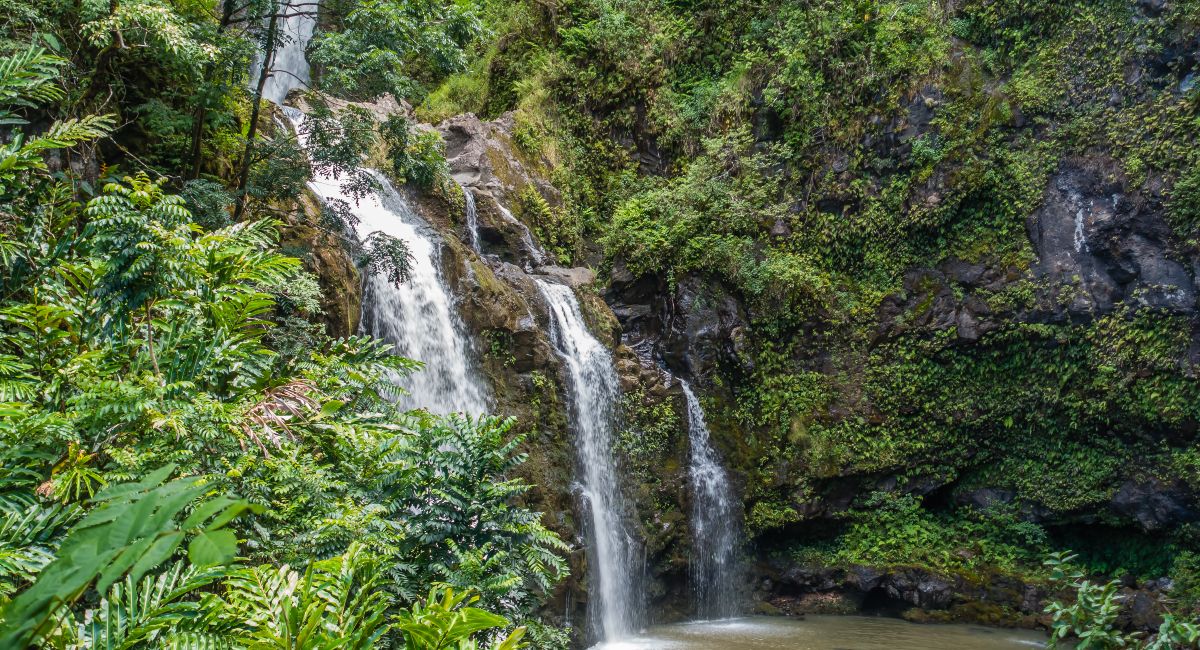
Garden of Eden Arboretum (Mile 10.5) — A privately maintained botanical garden with maintained trails, labeled plants, and ocean lookouts. Check current admission on the official Garden of Eden website before you go. It is a good option on rainy mornings because the paths are maintained and the canopy keeps you relatively dry.
Kaumahina State Wayside Park (Mile 12) — The first real restrooms on the road (flush toilets, maintained facilities). Picnic tables with sweeping ocean views. Worth a 10-minute stop even if only for the facilities — the next flush restrooms are not for another 10 miles.
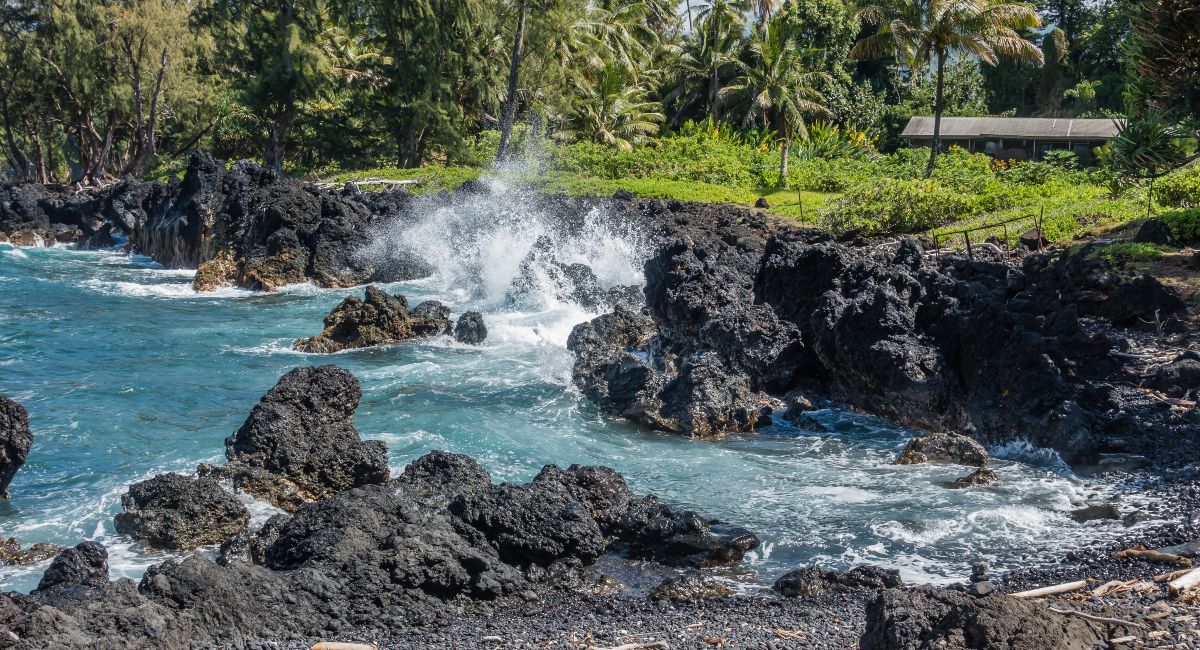
Keʻanae Peninsula (Mile 16.5-17) — A flat lava peninsula where taro has been cultivated by Hawaiian families for generations. The contrast of black lava against the pounding surf is one of the most striking visuals on the entire drive. This is also where you will find Aunty Sandy’s banana bread — the Road to Hana banana bread stand that shows up in every guide for a reason. The banana bread is dense, warm, and baked daily. Cash only.
We hear from renters all the time that the Halfway to Hana route is the sweet spot for families with young kids who cannot handle 10-plus hours in a car. Keʻanae is the natural turnaround point, and the lava coastline alone makes the drive worth it.
Keʻanae Arboretum (Mile 16.7) — A short walk through native and introduced plant species along a stream. Free, no reservation needed, and rarely crowded.
Miles 22-32: Wailua to Waiʻanapanapa
Puaʻa Kaʻa State Wayside (Mile 22.5) — A small waterfall and pool area right off the highway with flush restrooms. This is the Road to Hana waterfalls spot where you can wade in without a long hike — the falls are steps from the parking area.
Nahiku Marketplace (Mile 29) — A cluster of food stalls and vendors tucked off the main road. Expect coconut candy, smoked fish, banana bread variations, and sometimes hot food. Portable restrooms here. Hours and vendor availability vary — some stalls close early or skip weekdays.
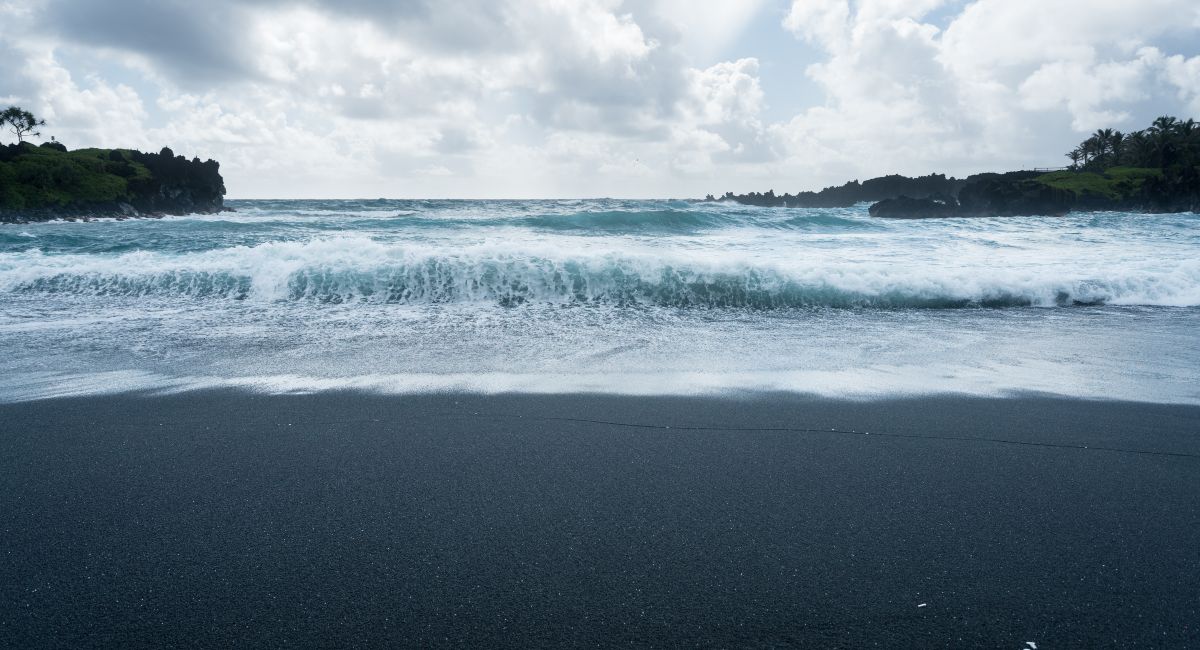
Waiʻanapanapa State Park — Black Sand Beach (Mile 32) — The black sand beach at Waiʻanapanapa is one of the most photographed spots on Maui, and for good reason. Jet-black pebble sand, sea caves, blowholes, and turquoise water crashing against lava rock. You can also walk a short section of the ancient King’s Trail along the coast.
Reservation required. Nonresident visitors need an advance online reservation for Waiʻānapanapa State Park through gostateparks.hawaii.gov. Reservations may be made up to 30 days in advance, and visitors should arrive within the first 30 minutes of their reserved entry window or they may be denied access. Hawaiʻi residents with valid ID are exempt from the reservation and fee requirement.
Miles 32-52: Hana Town to Oheʻo Gulch and the Pipiwai Trail
Hana Town (Mile 34) — The town itself is small — a general store, a handful of restaurants, a gas station, and Hana Bay Beach Park with restrooms and a calm swimming area. Many visitors expect a grand destination after 52 miles of driving. Hana is not that. It is quiet, residential, and beautiful in a low-key way. The real payoff is 10 miles farther south at Kipahulu.
Hana Bay Beach Park — Good for a picnic lunch, a swim in calmer waters, and restrooms. If you packed food, this is the place to eat it.
Oheʻo Gulch / Seven Sacred Pools (Mile 42) — Located in the Kipahulu District of Haleakala National Park, Oheʻo Gulch is a series of tiered freshwater pools connected by small waterfalls. The Pools of ʻOheʻo are subject to safety-related access restrictions, and visitors should check Haleakalā National Park’s current conditions page before visiting. Visitors can still explore the Kīpahulu area, including viewpoints and the Pipiwai Trail, even when water access is restricted. Check current conditions before your visit. The national park entrance fee is $30 per vehicle (valid for 3 days, covers both Summit and Kipahulu districts). The park is cashless — bring a credit or debit card. Flush restrooms at the Kipahulu Visitor Center.
Pipiwai Trail — The Bamboo Forest (Mile 42) — This is it. The 4-mile round-trip hike through a dense bamboo forest to 400-foot Waimoku Falls is, for many visitors, the highlight of the entire Road to Hana. The trail starts at the Kipahulu Visitor Center, passes Makahiku Falls at the half-mile mark, then enters the bamboo — thousands of stalks clicking and creaking in the wind around a narrow boardwalk trail. Allow several hours for the Pipiwai Trail, especially if you plan to stop at viewpoints or continue to Waimoku Falls. Guests tell us the bamboo forest is consistently the moment they remember most from the entire trip — bring a fully charged phone because you will want photos. The trail is unpaved, rocky, and gets slippery after rain. Wear shoes with grip — not slippers. Check the current operating hours for the Kīpahulu District before you go, since park hours can change.
Should You Drive the Back Road or Turn Around at Hana?
We have talked with enough guests who tried the back road to say this confidently: most visitors should turn around at Oheʻo Gulch and return to Paʻia the same way they came. The back road south of Kīpahulu can be narrow, rough, and subject to changing conditions or closures, so most visitors are better off returning the way they came.
Road to Hana Back-Road Access
Before attempting the back road, check current Maui County road notices and confirm that your rental agreement allows travel on that route. The road is frequently closed during and after heavy rain events, and portions remain restricted depending on conditions. Before planning a full-loop drive, check the Maui County road closure page for the most current status.
Rental Car Restrictions for Road to Hana
Most rental car companies on Maui explicitly exclude the unpaved section of Piʻilani Highway from their coverage. If you damage a tire, rim, or undercarriage on the back road, you are likely paying out of pocket. Call your rental company before your trip and ask specifically about Piʻilani Highway. If they say the road is excluded, take them at their word.
The safe and reliable return route is back through Hana, Keʻanae, and Paʻia. It goes faster on the way back because you have already driven it, and the late-afternoon light hits the coastline differently.
What About a “Halfway to Hana” Itinerary If You Are Short on Time?
A Halfway to Hana itinerary covers Paʻia to Keʻanae Peninsula — roughly 17 miles of the Hana Highway — in 4 to 5 hours round trip. You still get waterfalls, the banana bread stand, the lava coastline, and multiple swimming holes, all without the full-day commitment.
This Road to Hana itinerary works well for families with young kids, visitors with only 4 to 5 days on Maui who cannot give up a full day, and anyone who gets carsick (the first 17 miles have fewer hairpin curves than the stretch past Keʻanae).
The Halfway Itinerary, Stop by Stop
7:00-7:30 AM — Leave your rental. If staying in West Maui, aim for 7 AM. If staying in Kihei or Wailea, 7:30 AM works.
8:00-8:30 AM — Arrive in Paʻia. Top off gas, grab a coffee, use the restrooms.
8:45 AM — Twin Falls (Mile 2). Quick 15-to-20-minute walk to the waterfall and swimming hole. Do not linger — you will want the time at Keʻanae.
9:30 AM — Garden of Eden Arboretum (Mile 10.5). Optional, but a nice stop on a misty morning. Skip if you are tight on time.
10:00 AM — Kaumahina State Wayside (Mile 12). Restrooms and a sweeping ocean lookout.
10:30-11:30 AM — Keʻanae Peninsula (Mile 16.5-17). Banana bread at Aunty Sandy’s. Walk the lava coastline. Watch the surf pound the rocks. This is the anchor stop of the half-day route — give it a full hour.
11:30 AM — Turn around and head back toward Paʻia.
1:00-1:30 PM — Back in Paʻia for a late lunch. Total time: about 5 hours including stops.
Food and Restrooms on the Short Route
- Paʻia — Restaurants, gas, restrooms
- Twin Falls (Mile 2) — Portable restrooms, fruit/smoothie stands (cash only)
- Kaumahina State Wayside (Mile 12) — Flush restrooms, picnic tables
- Keʻanae (Mile 16.5) — Aunty Sandy’s banana bread (cash only), no public restrooms (the nearest are at Kaumahina, 4.5 miles back)
What Should You Pack and Prepare Before the Drive?
Cell service drops out, food options are limited, and the weather shifts from sunny to pouring in minutes. Preparation makes or breaks this drive. Here is your Road to Hana tips checklist.
Road to Hana Cell Service Dead Zones
Expect spotty to nonexistent cell service across much of the route outside town centers, so do not rely on live navigation or a strong data connection. Here is a table based on our experience with cell service on the route. Experiences with cell service may vary depending on factors like environmental conditions, network providers.
| Stretch | Cell Service |
| Paʻia to Haiku (Miles 0-5) | Last reliable coverage |
| Haiku to Twin Falls (Miles 5-7) | Spotty, drops frequently |
| Twin Falls to Keʻanae (Miles 7-17) | Mostly dead with brief spots near Garden of Eden |
| Keʻanae to Hana (Miles 17-34) | No reliable service |
| Hana Town (Mile 34) | Might be enough for texts and basic loading |
| Hana to Oheʻo Gulch (Miles 34-42) | No reliable service |
Before you leave your rental: Download an offline Google Map of the Road to Hana area. Open the Google Maps app, search “Maui,” tap the three dots, and select “Download offline map.” This gives you turn-by-turn directions even with zero signal.
Road to Hana Restrooms by Mile Marker
| Mile Marker | Location | Type |
| 0 | Paʻia Town | Restaurants, gas stations |
| 2 | Twin Falls | Portable (trailhead) |
| 10.5 | Garden of Eden | Flush (with admission) |
| 12 | Kaumahina State Wayside | Flush (free) |
| 22.5 | Puaʻa Kaʻa State Wayside | Flush (free) |
| 29 | Nahiku Marketplace | Portable |
| 32 | Waiʻanapanapa State Park | Flush (with reservation) |
| 34 | Hana Bay Beach Park | Flush (free) |
| 42 | Kipahulu Visitor Center (NPS) | Flush (with park entry fee) |
What to Pack
- Full gas tank — Fill up in Paʻia or Kahului. One gas station in Hana town, but prices are steep.
- Water — At least 2 liters per person. We have seen guests underestimate this one more than anything else — tropical heat and hiking drain you faster than you expect.
- Snacks and a packed lunch — Roadside stands sell banana bread and fruit, but there is no reliable sit-down food until Hana town. Pack sandwiches if you want a real meal.
- Cash in small bills — $1s and $5s for fruit stands and banana bread. Most roadside vendors are cash only.
- Reef-safe sunscreen — Mineral sunscreen is the safest choice for Maui County. County Ordinance 5306 bars the sale, distribution, and use of non-mineral sunscreen without a prescription.
- Rain jacket or poncho — East Maui is a rainforest. Rain is not a maybe.
- Swimsuit and a towel — Multiple swimming holes along the route. A dry change of clothes is smart too.
- Water shoes or sturdy sandals — Rocky trails and stream crossings are common at waterfall stops. Flip-flops get slippery.
- Dramamine or ginger candies — 620 curves cause motion sickness for a lot of people. Take Dramamine 30 minutes before you start driving. Ginger candies (available at shops in Paʻia) are a milder alternative. Riding in the front seat and looking at the horizon helps. Being the driver also helps — drivers tend to feel less nauseous than passengers.
- Portable phone charger — Your phone drains faster when searching for a signal it cannot find.
- Waiʻanapanapa reservation confirmation — If you plan to visit the black sand beach, book your time slot at gostateparks.hawaii.gov up to 30 days in advance.
Driving Etiquette
The Hana Highway is a daily commute for East Maui residents. Pull over at designated pullouts to let faster traffic pass — a quick shaka wave through the window goes a long way. Use your headlights even during the day (the canopy gets dark), yield to oncoming traffic on one-lane bridges (the car closest to the bridge has the right of way — if they are already on it or closer, wait for them to cross). Do not park on the highway shoulder or anywhere marked as restricted; enforcement is active and illegally parked vehicles may be cited.
Where Can You Stay Near the Road to Hana Start?
The closer you sleep to Paʻia, the earlier you reach the first waterfall and the less driving you do after a long day. Guests staying in our Kaʻanapali rentals tell us the extra hour of driving to reach Paʻia is absolutely worth it — you just need to plan for it.
From West Maui (Kaʻanapali, Napili, Kapalua): Add 50 to 75 minutes to reach Paʻia. That means a 6:30 or 7:00 AM departure from your rental. After a full day on the road, you will not get back to your condo until 7 or 8 PM. Worth it — but know the time commitment going in. Browse our West Maui vacation rentals for condos with full kitchens where you can prep your road-trip cooler the night before.
From South Maui (Kihei, Wailea): Add 30 to 45 minutes to reach Paʻia. Slightly closer than West Maui, and the morning drive across the central valley is quick. Check out our Kihei rentals or Wailea vacation rentals if South Maui is your base.
From Central Maui (Kahului): Only 15 to 20 minutes to Paʻia. The closest base camp for the Hana Highway, though most visitors prefer the beach areas for the rest of their trip.
No matter where you are staying, every MPP Vacations rental comes with free activities included with your stay through our Xplorie partnership — from whale watches to sunset sails to farm tours. It is a good way to fill the other days of your trip while saving the full day for the Road to Hana.
Explore all MPP Vacations rentals across Maui to find the right fit for your trip, or browse by Maui areas and regions to compare neighborhoods.
About This Guide
This Road to Hana guide was developed using firsthand insights from MPP Vacations staff and guest feedback, combined with verified information from the following sources:
Primary sources:
- Hawaiʻi Department of Land and Natural Resources — Waiʻanapanapa State Park (reservation requirements, fees, and park hours)
- National Park Service — Haleakala National Park, Kipahulu District (Pipiwai Trail distance, park hours, entrance fees, and current conditions)
Secondary sources:
- Hawaiʻi Tourism Authority — Go Hawaiʻi, Road to Hana (general Maui travel planning and Road to Hana overview)
- Maui County Road Closure Notifications (road conditions, Piʻilani Highway closures, and weather-related restrictions)
- National Park Service — Haleakala Fees & Passes (current entrance fee schedule)
- GoStateParks Hawaiʻi — Waiʻanapanapa Reservations (online reservation system and fee details)
Fees, park hours, and road conditions are date-stamped to July 2026 where noted. Conditions on the Hana Highway change frequently — check official sources linked above before your trip for the latest closures and access updates.
Frequently Asked Questions About the Road to Hana
How many stops are on the Road to Hana?
There are well over 30 named stops between Paʻia and Oheʻo Gulch, but most visitors hit 8 to 12 on a full-day trip. The Road to Hana stops that consistently rank as must-sees are Twin Falls (mile 2), Keʻanae Peninsula (mile 16.5), Waiʻanapanapa Black Sand Beach (mile 32), and the Pipiwai Trail bamboo forest (mile 42). Trying to stop at every single one will stretch your day past 14 hours and leave you driving hairpin curves in the dark — not recommended.
Do you need a reservation for the Road to Hana?
You do not need a reservation to drive the road itself. You do need a reservation for Waiʻanapanapa State Park (the black sand beach at mile 32). As of July 2026, non-resident entry costs $5 per person plus $10 per vehicle for parking, booked through gostateparks.hawaii.gov. Reservations open 30 days ahead and release at midnight Hawaiʻi time daily. The Kipahulu District of Haleakala National Park (Oheʻo Gulch and Pipiwai Trail) requires a $30 per vehicle entrance fee but no advance reservation.
Is the Road to Hana dangerous?
The road demands steady attention — 620 curves, one-lane bridges, no shoulder in many spots, and blind corners. But thousands of visitors drive it every week without incident. Stay in your lane, use headlights, yield on one-lane bridges, pull over for faster local traffic, and do not drive it at night. The road is not dangerous if you drive it with respect and patience. Avoid driving when fatigued, and consider splitting driving duties if you have two licensed drivers in the car.
Can you drive the Road to Hana in a regular car?
Yes. A regular sedan handles the Hana Highway from Paʻia to Kipahulu without any issues — the road is fully paved. A 4WD or SUV is not necessary for the main route. The only stretch that requires a higher-clearance vehicle is the unpaved back road (Piʻilani Highway) south of Kipahulu, and most rental companies exclude that stretch from their coverage entirely.
What time should you start the Road to Hana?
Leave your rental by 7 AM if you are staying in West Maui, or by 8 AM from South Maui or Central Maui. Starting early means lighter traffic, available parking at popular stops like Twin Falls, and enough daylight to reach the Pipiwai Trail before the Kipahulu District closes at 5 PM. Starting after 9 AM from West Maui puts you behind a convoy of tour vans and means you are driving curves in fading light on the way back.
How much does the Road to Hana cost?
The drive itself is free — there is no toll. Costs you may encounter: Waiʻanapanapa State Park reservation (as of July 2026, $10 parking plus $5 per person for non-residents), Haleakala National Park entrance at Kipahulu (as of July 2026, $30 per vehicle), Garden of Eden admission (as of July 2026, $20 per adult), gas (fill up in Paʻia; as of July 2026, expect $6-plus per gallon in Hana), and roadside food stands ($5-15 per item, cash only). A couple doing the full route will spend roughly $80 to $120 on fees and food beyond gas.
Is there food on the Road to Hana?
Yes, but it is limited and mostly cash-only. Near Twin Falls (mile 2), you will find smoothie and banana bread stands. At Keʻanae (mile 16.5), Aunty Sandy’s banana bread is a staple. Nahiku Marketplace (mile 29) has rotating vendors selling coconut candy, smoked fish, and sometimes hot plates. In Hana town (mile 34), there are a couple of restaurants and a general store. Pack a lunch if you want a reliable, full meal — a cooler with sandwiches, fruit, and extra water is the move. Your MPP Vacations rental comes with a full kitchen, so prep everything the night before.
Can you do the Road to Hana in half a day?
Yes. Drive from Paʻia to Keʻanae Peninsula (mile 17) and back. You will hit Twin Falls, the Garden of Eden, the first flush restrooms at Kaumahina, and the lava coastline and banana bread at Keʻanae. A shortened out-and-back itinerary toward Keʻanae is possible in about half a day, depending on traffic, weather, and how many stops you make. You miss the black sand beach and the bamboo forest, but you gain back an afternoon for the beach, a sunset dinner, or one of the free activities included with your MPP Vacations stay.