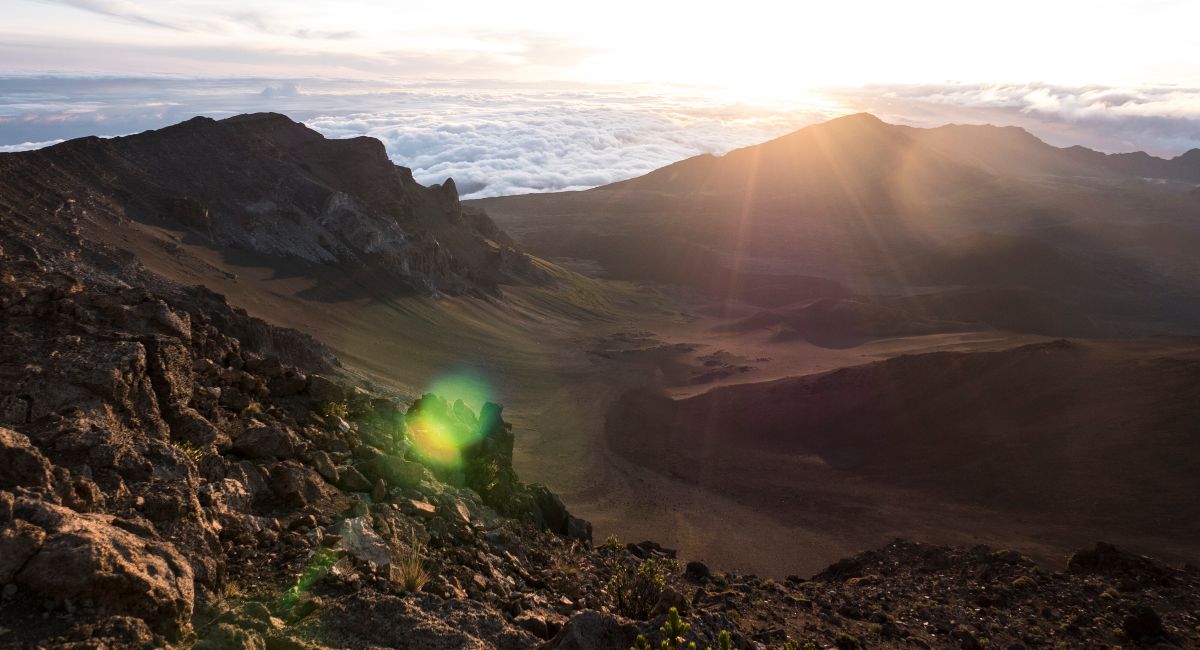
The Haleakala sunrise is one of those mornings you’ll talk about for years — but only if you actually get a reservation. Tickets open exactly 60 days in advance on recreation.gov and sell out within minutes, so the planning starts long before the 3 AM alarm. This guide covers everything from booking strategy to summit temperatures, drive times from every part of the island, and what to do if the reservations are gone.
The short version:
- Reservations open 60 days ahead at recreation.gov and sell out fast. A smaller batch drops 48 hours before each date. Set a reminder and be online right when they release.
- Leave your rental 2 to 2.5 hours before sunrise. From Ka’anapali, that means a 2:30-4:00 AM departure depending on the month. From Kihei or Wailea, you get an extra 30-45 minutes of sleep.
- The summit drops to 30-40 degrees F even in July. Bring layers, closed-toe shoes, and a blanket from your rental.
How Do You Get a Haleakala Sunrise Reservation — and What If They’re Sold Out?
You need a reservation for every vehicle entering Haleakala National Park between 3:00 AM and 7:00 AM. Reservations cost $1 per vehicle through recreation.gov, and you’ll pay the $30 park entrance fee separately at the gate. The park accepts only credit/debit cards and digital payment — no cash.
How to Book
The reservation system runs on two windows:
- 60-day window: Tickets release at 7:00 AM Hawai’i Standard Time (HST), exactly 60 days before your target date. This is the main batch, and it sells out in minutes. Have the page loaded, your account logged in, your payment info saved, and be refreshing at 6:55 AM HST.
- 48-hour window: A smaller batch of reservations also releases at 7:00 AM HST, two days before each date. Fewer people know about this one. Set an alarm for 6:55 AM HST and refresh the page.
You’re limited to one reservation every three days, so plan around that if your group needs multiple vehicles. Bring a photo ID matching the reservation holder’s name — rangers check at the gate.
What to Do If Reservations Are Sold Out
Missing the reservation window is the single biggest frustration travelers run into with Haleakala. Here are your real alternatives:
Enter after 7:00 AM without a reservation. The reservation requirement only applies from 3:00 AM to 7:00 AM. After 7:00 AM, you just need the standard $30 park entrance. You’ll miss the exact moment of sunrise, but the summit views, crater landscape, and morning light are still spectacular for another two to three hours before clouds typically roll in. Guests who have gone this route tell us they still consider it a top-three Maui experience.
See the sunset instead. No reservation is needed for sunset at Haleakala — just the park entrance fee. The colors at golden hour are underrated, the crowds are a fraction of sunrise, and you can check the weather from sea level before driving up. More on this below.
Try the stargazing programs. The NPS offers ranger-led stargazing programs at the summit. Haleakala is rated Bortle Class 2 for dark sky quality, putting it alongside the Atacama Desert and the Canary Islands as one of the best stargazing spots accessible to amateur astronomers.
Hike without the sunrise slot. Enter after 7:00 AM and head straight to the Keonehe’ehe’e (Sliding Sands) Trail. The morning light inside the crater is extraordinary, and you’ll have the trail largely to yourself once the sunrise crowd leaves.
What Time Do You Need to Leave for the Haleakala Sunrise?
Leave your rental 2 to 2.5 hours before the posted sunrise time. The drive from West Maui takes 2 to 2.5 hours in the dark; from South Maui, you’re looking at 80 to 110 minutes depending on whether you’re starting in Kihei or Wailea. Add 15-20 minutes for parking and walking to the viewing area.
Drive Times by Where You’re Staying
| Your Area | Drive to Summit | Suggested Departure (Summer Sunrise ~5:45 AM) | Suggested Departure (Winter Sunrise ~6:50 AM) |
| Ka’anapali / Napili | 2 to 2.5 hours | 2:45-3:15 AM | 3:45-4:15 AM |
| Kahului | 75-90 minutes | 3:30-3:45 AM | 4:30-4:45 AM |
| Kihei | 80-100 minutes | 3:15-3:30 AM | 4:15-4:30 AM |
| Wailea | 90-110 minutes | 3:05-3:20 AM | 4:05-4:20 AM |
Guests staying in our Ka’anapali vacation rentals tell us the 2 AM alarm is the hardest part — but every single one says it was worth it by the time the sun clears the crater rim.
Pro tip: If you’re flying in from the mainland, schedule Haleakala for your first or second morning. Your body clock is still running 2-6 hours ahead, so a 3 AM Hawai’i alarm feels like 6 AM Pacific or 9 AM Eastern. It’s the one time jet lag works in your favor.
Month-by-Month Sunrise Times
Sunrise at the summit shifts by more than an hour across the year. That directly affects what time your alarm goes off.
| Month | Approximate Sunrise | Wake-Up Notes |
| January | 6:55-7:05 AM | Easiest alarm — latest sunrise of the year |
| February | 6:45-6:55 AM | Still late; good odds if your trip falls here |
| March | 6:20-6:40 AM | Clocks spring forward; sunrise shifts earlier |
| April | 6:00-6:20 AM | Moderate wake-up |
| May | 5:45-6:00 AM | Summer pattern begins |
| June | 5:40-5:50 AM | Earliest sunrise window |
| July | 5:40-5:55 AM | Peak summer; earliest alarms |
| August | 5:50-6:05 AM | Starting to shift later |
| September | 6:00-6:15 AM | Moderate; shoulder season |
| October | 6:10-6:25 AM | Shifting later; easier wake-up |
| November | 6:25-6:50 AM | Getting easier |
| December | 6:45-7:00 AM | Late sunrise; most forgiving alarm |
Sunrise times are approximate for the Haleakala summit. Check timeanddate.com for your exact date.
When to Set Your Alarm
Work backward from sunrise:
- Start with the sunrise time for your month (table above)
- Subtract 30-45 minutes (you want to be at the summit before first light)
- Subtract your drive time (table above)
- Subtract 20 minutes for getting dressed, grabbing your bag, and warming up the car
For a summer trip staying in Ka’anapali: sunrise at 5:45 AM, minus 45 minutes = arrive by 5:00 AM, minus 2 to 2.5 hours driving = leave by 2:30-3:00 AM, minus 20 minutes = alarm at 2:10-2:40 AM.
Gas up the evening before. There are no gas stations on the drive up.
What Should You Wear and Bring to the Summit?
The summit sits at 10,023 feet, and pre-dawn temperatures run 30 to 40 degrees F — about 30 degrees colder than wherever you went to sleep. You’re packing for a tropical vacation, so this catches most travelers off guard.

Layering Strategy
- Base layer: Long pants and a long-sleeve shirt. Skip the shorts and tank top.
- Mid layer: A fleece, hoodie, or sweatshirt. Something you can zip on and off.
- Outer layer: A windbreaker or light jacket. Wind chill at the summit is real.
- Feet: Closed-toe shoes with socks. Flip-flops on volcanic cinder at 10,000 feet in 35-degree weather is a bad time.
- Extras: A beanie or warm hat, gloves if you run cold, and a blanket from your rental. Sunglasses for after sunrise — the reflection off the crater is intense.
In our experience, the biggest regret people have at the summit is not bringing enough layers. You can always peel them off on the drive back down — you’ll pass through about 20 climate zones between the summit and sea level.
Altitude Awareness
You’re going from sea level to 10,023 feet in about 90 minutes. That’s a rapid elevation gain, and some people feel it. Common symptoms include headache, slight dizziness, and shortness of breath.
Practical tips:
- Hydrate before and during the drive. Bring water.
- Move slowly when you get out of the car. Don’t sprint to the railing.
- If you feel dizzy, nauseous, or get a persistent headache, head back to the car and start driving down. Descending is the most effective response.
- Bring snacks. Low blood sugar plus altitude makes everything worse.
This isn’t a reason to skip Haleakala — the vast majority of visitors handle the altitude just fine. But knowing the symptoms means you won’t mistake altitude effects for something worse.
Is the Haleakala Sunrise Worth It — or Should You See the Sunset Instead?
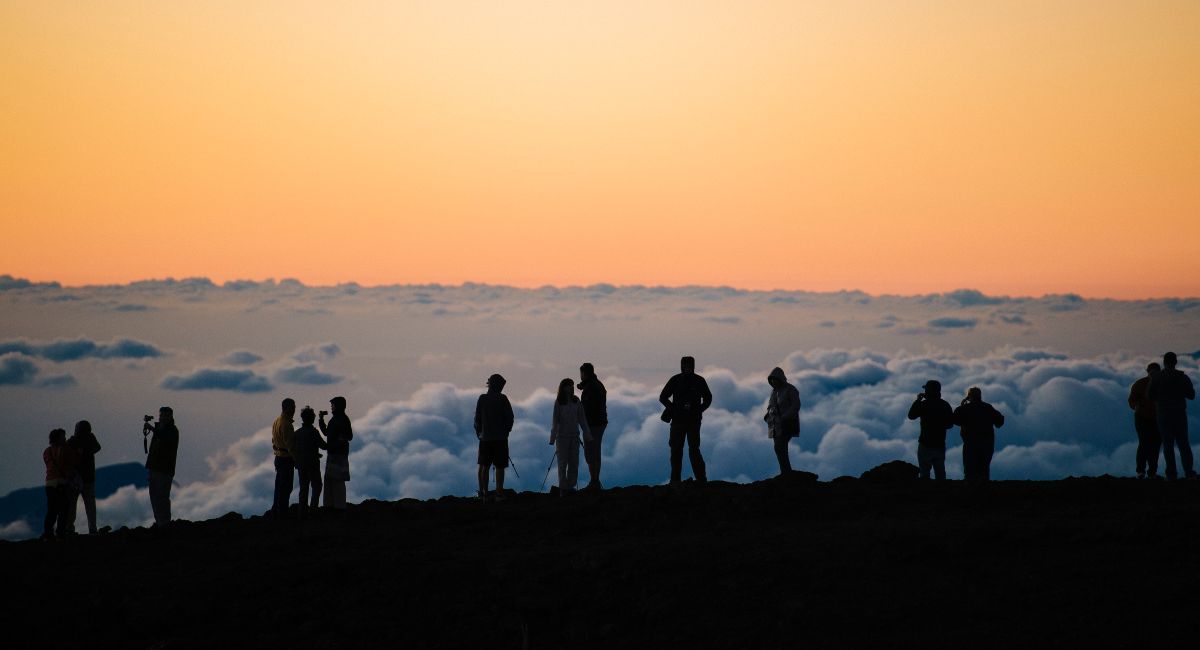
Both are spectacular, but they’re different experiences. Sunrise has the edge for the above-the-clouds moment — the way the light breaks across the crater floor from 10,000 feet above the Pacific is something you won’t see anywhere else in the United States. Sunset is the smarter logistical play: no reservation required, no 3 AM alarm, and you can check the weather before driving up.
Sunrise vs. Sunset Comparison
| Factor | Sunrise | Sunset |
| Reservation required? | Yes ($1 per vehicle, 3-7 AM) | No |
| Crowds | Heavy — 150 parking spaces fill up | Light to moderate |
| Temperature | 30-40 degrees F | 45-55 degrees F |
| Above-the-clouds view | Frequent — trade wind inversion layer sits below the summit most mornings | Less common in afternoon |
| Photo quality | Dramatic warm light breaking over the crater | Golden hour colors on the crater walls |
| Wake-up time | 2:30-4:00 AM | Drive up in the afternoon |
| Weather predictability | Low — you commit the night before | High — you can see the summit from most of the island during the day |
Choose sunrise if: This is a bucket-list experience for you, you’re visiting early in your trip (jet lag helps), and you’re OK with the chance that clouds might block the view.
Choose sunset if: You’re traveling with young kids, you want to check the weather first, you couldn’t get a reservation, or you’ve done sunrise before and want something different.
Month-by-Month Cloud Risk
The question everyone asks and no guide answers directly: “What month gives me the best odds of a clear sunrise?”
| Season | Cloud Risk at Summit | Notes |
| April – June | Lower | Dry season beginning; trade wind inversion layer reliably below summit |
| July – September | Lowest | Peak dry season; best statistical odds for clear skies |
| October | Moderate | Transition month; cloud cover increasing |
| November – December | Moderate to High | Transition to wet season; increasing moisture |
| January – March | Highest | Wet season; more cloud and fog at summit level |
In our experience, the biggest sunrise disappointment comes from cloud cover in late winter months. If your trip falls during the wetter season (November through March), we recommend scheduling your Haleakala morning for mid-week in your itinerary so you have a backup day if clouds roll in. Check the National Weather Service summit forecast the evening before.
No month is a sure thing, and no month is a lost cause. Even in February, plenty of mornings break clear. The weather at 10,023 feet does what it wants.
Self-Drive vs. Guided Tour — Which Is Better for the Haleakala Sunrise?
Self-driving saves more than $200 per person and gives you full control of your morning. Guided tours handle the pre-dawn driving and often add a bike ride down the volcano as part of the package. The right call depends on how comfortable you are driving switchback roads in the dark.
Pros and Cons
Self-drive is the better fit if:
- You’re comfortable driving winding mountain roads at night
- You have a rental car (most MPP Vacations guests do)
- You want to stay at the summit as long as you want — linger, hike, watch the light change
- You’re traveling with a group and want to split the per-vehicle cost
A guided tour makes sense if:
- The dark mountain drive genuinely worries you — the road has switchbacks, limited guardrails, and zero lighting
- You want someone else handling logistics so you can fully be present for the experience
- You want the bike-down-the-volcano add-on without renting gear separately
- You’re a solo traveler and prefer the company
We’ve found that renters who book a guided tour tend to be first-time Maui visitors, while repeat guests almost always self-drive. They know the road, they know the summit, and they want to linger on their own schedule.
What Should You Do After the Sunrise?
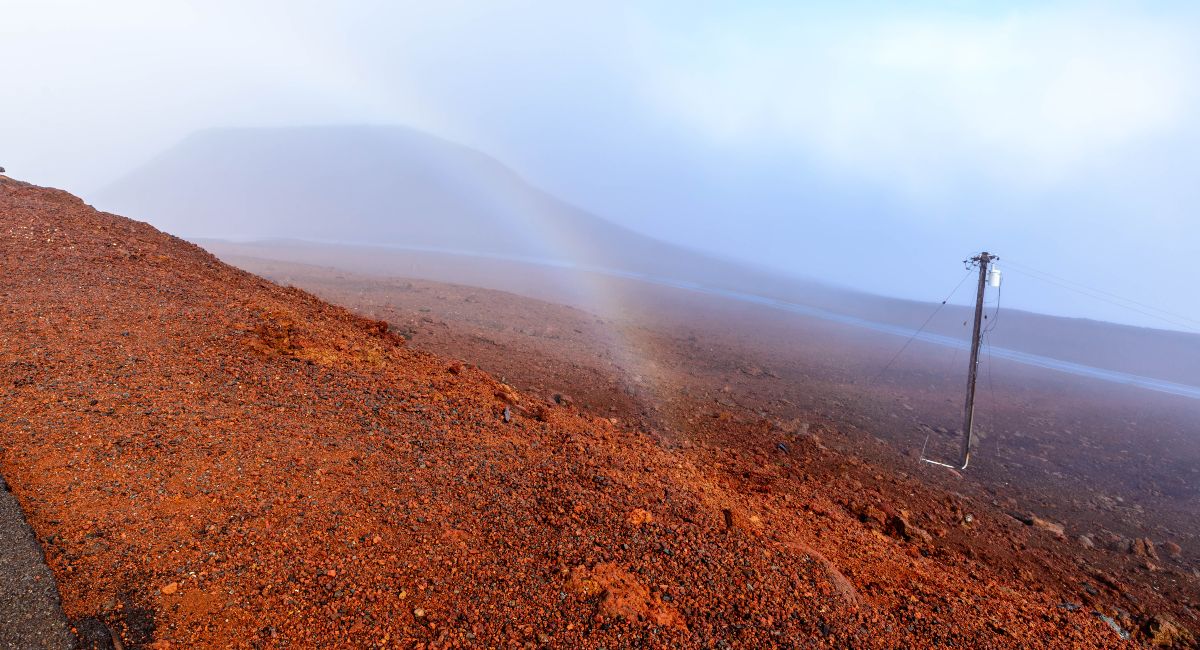
After the sun clears the crater rim, you have the rest of the morning ahead of you. Most visitors leave the summit by 7:00-7:30 AM, but the best part of the Haleakala day might be what comes next.
Hike Into the Crater
Two trailheads sit right at the summit:
- Keonehe’ehe’e (Sliding Sands) Trail: Starts at the Haleakala Visitor Center parking lot and descends into the crater through a Mars-like landscape of red and gray cinder cones. The first mile is a steep but manageable out-and-back that takes about 45 minutes to an hour round trip — the descent is easy, but the climb back at altitude is the real work. Going deeper means losing about 2,500 feet of elevation — and gaining it all back on the return. Budget your energy and bring water. Full trail details at nps.gov/hale.
- Halemauu Trail: Starts from a trailhead lower on the road and crosses the crater floor through native shrubland. Less steep than Sliding Sands but still demanding at altitude.
Both trails are worth the effort even if you only hike a half-mile in. We hear from guests regularly that the crater hike right after sunrise, when the crowd has thinned and the light is still low, was the most peaceful part of their entire trip.
Breakfast and Upcountry Stops on the Drive Down
The drive down from Haleakala passes through Kula and Upcountry Maui — one of the island’s most underrated stretches. The air is cooler, the pastures are green, and there are a handful of stops worth pulling over for:
- Ali’i Kula Lavender Farm — Walking gardens at 4,000 feet with views down to the coast. Open select days (Friday through Monday); check their site before driving out.
- Surfing Goat Dairy — Farm tours, cheese tastings, and goat encounters on the slopes of Haleakala. Open Tuesday through Saturday.
- Grandma’s Coffee House in Keokea — A longtime Upcountry staple for post-sunrise coffee and pastries on the drive down.
The NPS receipt hack: Your $30 park entrance receipt is valid for three days and covers both the summit district and the Kipahulu coastal district (home of the Pipiwai Trail and ‘Ohe’o Gulch on the Road to Hana). Keep your receipt if you’re planning a Road to Hana day later in your trip.
Start Your Haleakala Morning From an MPP Vacations Rental
After your Upcountry stops, you’ll be back at your rental by late morning with the entire afternoon free. Head to one of Maui’s best beaches, book one of the free activities included with your MPP Vacations stay, or collapse on your lanai. You earned it.
Set a 3 AM alarm from a Ka’anapali condo or get 30 extra minutes of sleep from a South Maui rental — your Haleakala sunrise starts at your front door. Browse MPP Vacations rentals and pick the spot that makes that pre-dawn drive a little shorter, or just a little more worth it.
About This Guide
This guide draws on the National Park Service Haleakala sunrise planning page, recreation.gov reservation data, NPS entrance fee schedules, Hawai’i Tourism Authority resources, and the firsthand experience of the MPP Vacations team, who put guests on the road to Haleakala every week of the year. Sunrise times referenced from timeanddate.com. All fees verified as of July 2026.
Frequently Asked Questions
Do you need a reservation for Haleakala sunrise?
Yes. Every vehicle entering the summit district between 3:00 AM and 7:00 AM needs a $1 reservation from recreation.gov, plus the $30 park entrance fee paid at the gate. Reservations open 60 days in advance and sell out in minutes. After 7:00 AM, no reservation is needed.
How cold is it at the top of Haleakala?
Pre-dawn summit temperatures typically run 30 to 40 degrees F year-round — roughly 30 degrees colder than sea level. Wind chill can push it lower. Dress in warm layers, bring closed-toe shoes, and grab a blanket from your rental on the way out the door.
Can you see the sunrise at Haleakala without a reservation?
Not the exact moment of sunrise. The reservation requirement covers 3:00 to 7:00 AM, and sunrise happens within that window every month. You can enter after 7:00 AM with just the park entrance fee and still see the summit, crater, and morning light — just not the sun breaking the horizon.
How long should you stay at the Haleakala summit?
Most visitors stay 30 to 60 minutes for the sunrise itself. If you want to hike, add one to three hours for the Keonehe’ehe’e or Halemauu Trail. The summit views stay dramatic well past sunrise, and the crowd clears out by 7:30 AM.
Is Haleakala sunrise better than sunset?
Sunrise is the bigger spectacle — the above-the-clouds moment and the way light fills the crater is hard to match. Sunset is the easier experience — no reservation, no 3 AM alarm, warmer temperatures, smaller crowds, and you can check the weather before committing. Both are worth doing if your schedule allows.
Can you get altitude sickness at Haleakala?
You can. The summit is at 10,023 feet, and you’re driving from sea level in about 90 minutes. Most visitors feel fine, but headache, mild dizziness, and shortness of breath are not uncommon. Hydrate before the drive, move slowly at the top, and descend if symptoms persist.
What is the best month to see Haleakala sunrise?
April through September gives you the best statistical odds of clear skies — it’s the dry season, and the trade wind inversion layer sits reliably below the summit. The sweet spot is June through August, when the summit records its lowest rainfall and highest clear-sky hours. Winter months (November through March) carry higher cloud risk, though clear mornings still happen regularly. No month is a guarantee.