

Quick Summary: Maui offers incredible hiking diversity from lush bamboo forests to volcanic craters. The top 5 must-do trails include Waimoku Falls via Pipiwai Trail’s 4-mile journey through a bamboo forest, Sliding Sands Trail into Haleakalā crater with otherworldly landscapes, Waiheʻe Ridge Trail offering coastal and valley views, Twin Falls for waterfall swimming, and Lahaina Pali Trail with panoramic island views. Most trails are accessible year-round, with $30 National Park entrance fees for Haleakalā trails. Always respect Hawaiian culture and mālama ʻāina (care for the land), stay on marked trails, and leave nothing but footprints behind you. Book your perfect Maui base with Maui Paradise Properties and start planning your island adventure.
What Makes Maui’s Hiking Trails So Special?
Maui offers extraordinarily diverse climates that never fail to surprise me. One morning you’re walking through a mystical bamboo forest where wind chimes seem to play themselves, and the next, you’re standing on Mars-like terrain at 10,000 feet, watching silversword plants shimmer in the alpine sun. It’s this extraordinary diversity packed into just 727 square miles that makes Maui hiking truly magical.
What strikes me most isn’t just the scenery, though trust me, it’s spectacular, but the deep cultural connection woven into every step. On Maui, hiking is more than a scenic walk; it’s a chance to move with intention and learn from the landscapes shaped by culture, history, and nature.
Whether you’re seeking that perfect family waterfall adventure or ready to challenge yourself on a volcanic crater descent, Maui delivers experiences that stick with you long after you’ve returned home. The combination of year-round hiking weather, well-maintained trails, and those “pinch-me-I’m-really-here” views creates hiking memories you’ll be talking about for years.
How Do I Choose the Right Maui Hiking Trail for My Group?
My advice? When navigating trail choices, success comes down to honest assessment and smart planning. Start with your group’s fitness reality, not their aspirations. Then factor in time availability, weather conditions, and what type of scenery you want to experience.
For families with young kids or nervous first-timers, Twin Falls Trail and Kapalua Coastal Trail offer that perfect sweet spot of “wow” factor without the intimidation. Intermediate hikers ready for more challenge will find their groove on 4-6 mile adventures, while experienced trail veterans should definitely tackle the crater hikes that’ll give them serious bragging rights.
Weather plays a crucial role in trail selection. The Pipiwai Trail area can see rain two-thirds of the month, even during “dry season” (April-October), so pack accordingly. For sunrise hikes like Haleakalā, bring warm layers. The temperature difference between sea level and 10,000 feet will shock you.
What Are the 5 Most Popular Hiking Trails on Maui?
These five trails have earned their reputation as Maui’s most beloved hiking experiences, offering diverse landscapes and unforgettable adventures.
1. Waimoku Falls via Pipiwai Trail: The Bamboo Forest Adventure
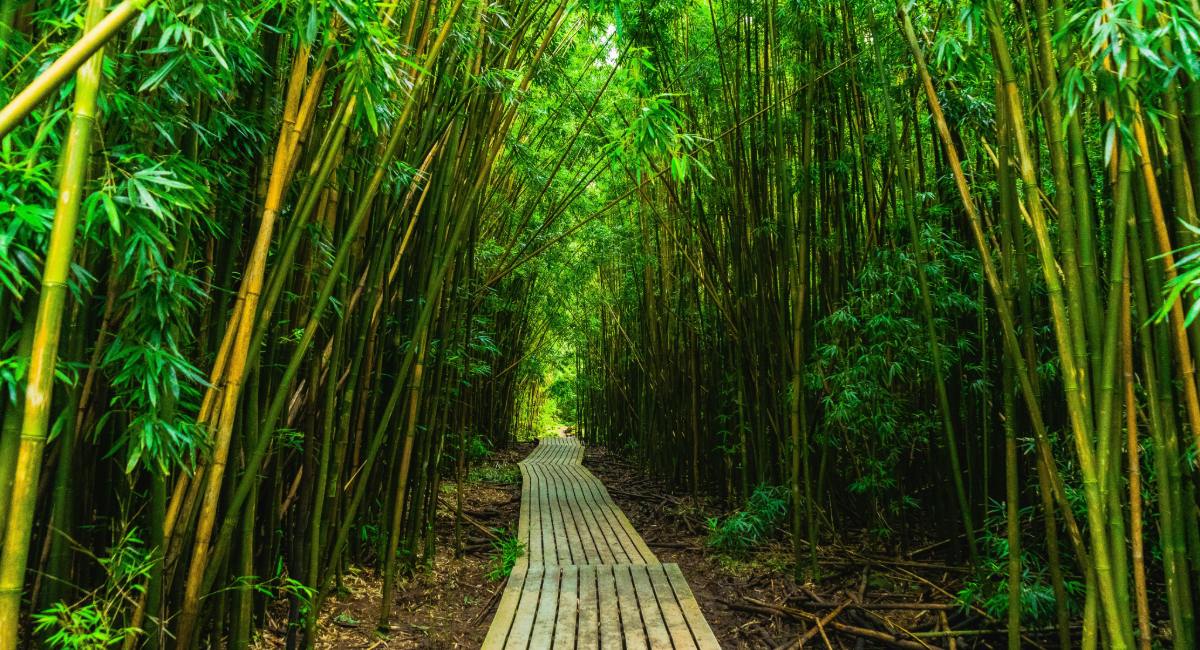
This trail is pure magic, and I don’t use that word lightly. The 3.8-mile journey through lush jungle and bamboo forest is considered by many to be the best hike on the island. The trail to thundering 400-foot Waimoku Falls begins near the famous ʻOheʻo Gulch and weaves through Haleakalā National Park’s Kipahulu District. The path features a massive 100+ year old banyan tree and stunning views of Makahiku Falls. Every turn reveals something new, making it a full-sensory experience you’ll never forget.
Trail Details:
- AllTrails Name: Waimoku Falls via Pipiwai Trail
- Trailhead: Kipahulu Visitor Center, Haleakalā National Park, 96713
- Distance: 3.8 miles round-trip
- Elevation Gain: 908 feet
- Hike Duration: 2-4 hours
- Difficulty: Moderate
- Drive Time: 3+ hours from most Maui resorts (via Road to Hana)
- Parking: Large paved lot plus unpaved overflow
- Entry Fee: $30 per vehicle, $25 motorcycle, $15 per person on foot/bike
Trip Tips: Arrive by 9 AM when gates open. Early mornings offer easier parking and a quieter experience through the bamboo forest. The trail stays relatively cool thanks to forest canopy coverage, but trust me when I say: wear shoes you can sacrifice to the mud. This trail will test your footwear’s commitment to staying clean.
2. Sliding Sands (Keonehe’ehe’e): Journey into Haleakalā Crater
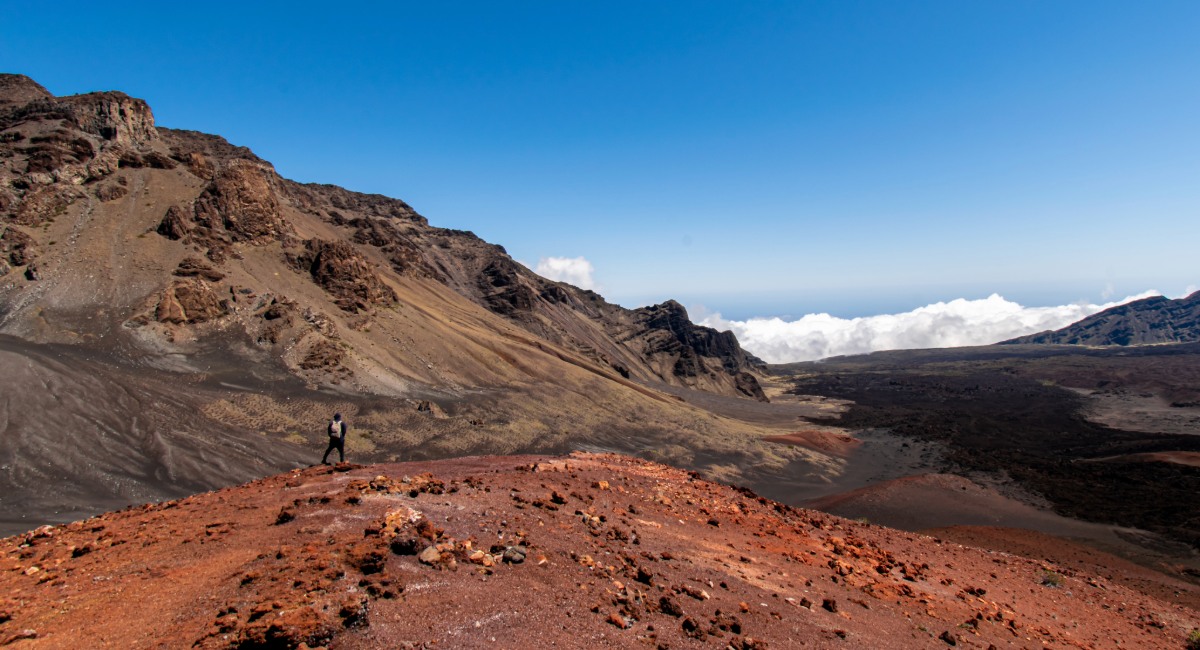
If hiking the Pipiwai Trail is like entering a fairy tale, then Sliding Sands is like stepping onto another planet. The moment you begin your descent from Haleakalā’s summit, you’re transported to a landscape so otherworldly that NASA has actually used this area for Mars research. From silversword plants to the crater’s bright and rusty palette, this trail is a photographer’s dream that changes with every cloud shadow. Those staying in the cooler Upcountry Maui region will find this an ideal day adventure.
Trail Details:
- AllTrails Name: Sliding Sands (Keonehe’ehe’e)
- Trailhead: Haleakalā Visitor Center, Summit District, 96768
- Distance: 2-11.2 miles (choose your turnaround point)
- Elevation Gain: 3,054 feet for full trail (mostly on return)
- Hike Duration: 2-8 hours, depending on distance
- Difficulty: Moderate to Hard (due to return climb at altitude)
- Drive Time: 2 hours from most Maui locations
- Parking: Large lot (arrive early for sunrise viewing)
- Entry Fee: $30 per vehicle, $25 motorcycle, $15 per person on foot/bike
Trail Tips: Most people underestimate this hike because the first part is all downhill, it feels deceptively easy. But remember, whatever elevation you lose going down, you’ll have to gain coming back up at altitude where oxygen is thinner. Plenty of overconfident hikers struggle on the return. The park service recommends turning around at 2.5 miles for day hikers, and trust me, they know what they’re talking about.
3. Waiheʻe Ridge Trail: Panoramic Valley and Ocean Views
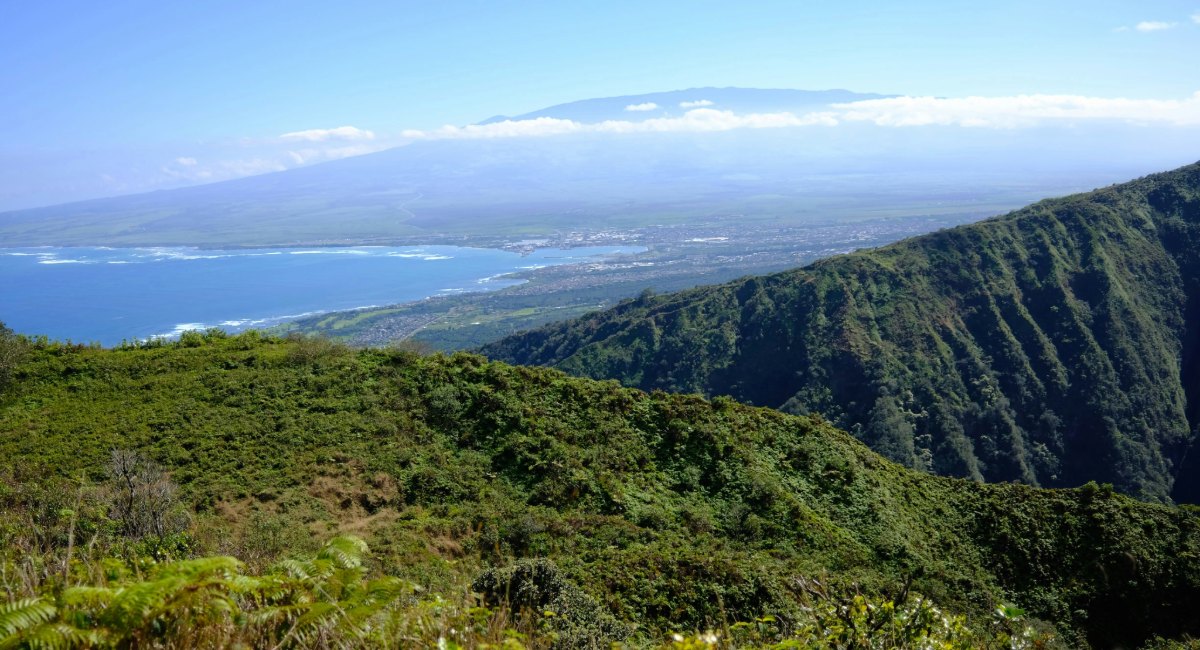
This trail in the West Maui Forest Reserve delivers some of the most dramatic scenery you’ll find on the island. The 4-mile round-trip journey might leave your legs burning, but the 360-degree views from the summit will leave you speechless. At 2,563 feet, the views span from the emerald valleys of Waiheʻe Gorge to the sparkling Pacific. On clear days, you might spot rare native birds like the Hawaiian honeycreeper, making this trail a favorite among both hikers and birders.
Practical Details:
- AllTrails Name: Waiheʻe Ridge Trail
- Trailhead: Maluhia Road off Kahekili Highway, Wailuku, 96793
- Distance: 4.0 miles round-trip
- Elevation Gain: 1,610 feet
- Hike Duration: 2 hours 50 minutes average
- Difficulty: Moderate with steep sections
- Drive Time: 45 minutes from West Maui resorts, 25 minutes from Kahului
- Parking: Small lot (gates open 7 AM; arrive early or park 0.8 miles away)
- Entry Fee: Free
Trail Tips: Arrive when the gates open at 7 AM or risk adding nearly a mile each way to your hike. The small parking area fills fast, and the overflow lot is a significant walk away. But even more importantly, morning hikes offer clearer views before afternoon clouds start building around the peaks.
4. Twin Falls Trail: Family-Friendly Waterfall Adventure

Don’t let the modest 1.8-mile distance fool you; this trail delivers big when it comes to waterfall payoff. Located just 35 minutes from the airport, it’s become a must-visit spot for good reason. The easy trail following Hoʻolawa liʻiliʻi stream provides access to multiple waterfalls and swimming opportunities, making it perfect for families or anyone wanting a quick tropical adventure without committing to a full day.
Trail Details:
- AllTrails Name: Twin Falls Trail
- Trailhead: Mile Marker 2, Hana Highway (360), Haiku, 96708
- Distance: 1.8 miles round-trip
- Elevation Gain: 347 feet
- Hike Duration: 53 minutes average
- Difficulty: Easy to moderate (though stream crossings and uneven ground can make footing tricky in spots)
- Drive Time: 35 minutes from Kahului Airport, 20 minutes from Paia
- Parking: 55 paid spots at $10 per car (first-come, first-served)
- Entry Fee: $10 parking fee
Trail Tips: The fruit stand at the entrance is part of what makes Twin Falls special. It’s run by the landowners who’ve generously opened this beautiful trail to visitors. Purchasing a fresh coconut or smoothie is a small way to show your appreciation. And yes, bring those water shoes; the stream crossings are part of the fun, but your feet will thank you for the extra grip.
5. Lahaina Pali Trail: Historic Path with Panoramic Views
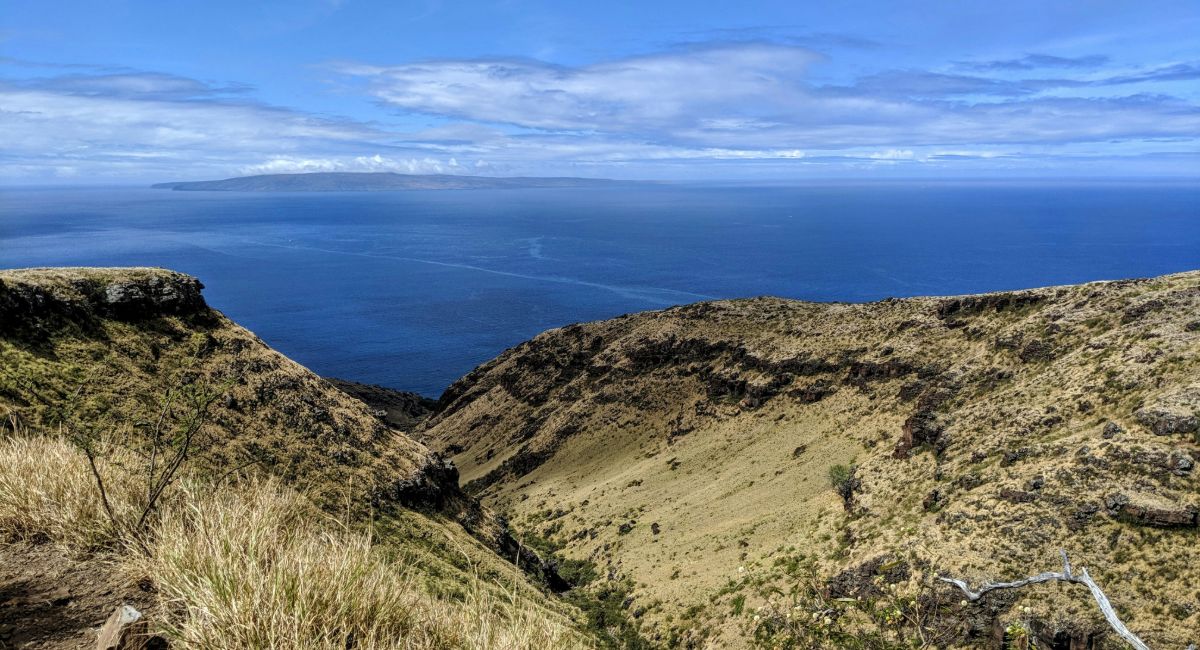
This challenging 5-mile trail offers a glimpse into Hawaiian history, following the original Old Pali Road hand-built in the 1800s, an experience that blends physical challenge with historical reflection. Passing through the Kaheawa Wind Farm, the trail offers stunning panoramic coastline views of Kahoʻolawe, Lanaʻi, and Molokini Crater.
Trail Details:
- AllTrails Name: Lahaina Pali Trail
- Trailhead: Ukumehame Trailhead: Highway 30, 0.25 miles north of Pali tunnel; Maʻalaea Trailhead: End of unimproved road near junction of Kuihelani Highway (380) and Kihei Road (31)
- Distance: 5.0 miles point-to-point, 10 miles round-trip
- Elevation Gain: 1,564 feet
- Hike Duration: 3 hours 6 minutes average for one-way
- Difficulty: Challenging
- Drive Time: 15 minutes from South Maui locations
- Parking: Ukumehame has a designated lot; Maʻalaea requires drop-off (no parking facilities)
- Entry Fee: Free
Trail Tips: This trail earned its “challenging” rating honestly. There’s virtually no shade, the terrain is rocky lava that demands your attention with every step, and the sun can be relentless. I recommend the east-to-west direction starting before sunrise. You’ll climb with the mountains providing some shade, then descend with ocean breezes cooling your back. And seriously, bring twice the water you think you need and reapply sunscreen.
Are there Quieter Trails Worth Exploring on Maui?
Beyond the well-known hikes are trails that offer peaceful experiences and different perspectives on Maui’s natural beauty.
Kapalua Coastal Trail: Easy Ocean Views

This gentle 1.5-mile coastal walk perfectly captures the laid-back elegance that makes Kapalua special. With minimal elevation change and constant ocean views, it’s ideal for those seeking beauty without the burn. The trail can get quite windy—hat-holding windy—but those breezes also keep you cool and comfortable. Those staying at West Maui accommodations will find this practically on their doorstep.
Makawao Forest Reserve: Misty Mountain Trails
Up in the cool elevations around Makawao, these forest trails offer a completely different Maui experience. Think misty mornings, towering eucalyptus and pine trees, and that crisp mountain air that makes you forget you’re in the tropics. It’s popular with mountain bikers too, so stay alert, but the cooler temperatures and shaded paths make this a perfect escape from beach heat.
La Perouse Bay (Hoapili Trail): Lava Field Adventure
For something completely different, this trail takes you across relatively recent lava flows to archaeological sites that speak to Hawaii’s ancient past. The landscape feels almost lunar, but the coastal views and possible wildlife sightings, including monk seals, goats, and seasonal humpback whales, keep things lively.
What Should I Know About Hiking Safety and Cultural Respect?
Hiking in Maui isn’t just about chasing waterfalls or jaw-dropping views; it’s about moving through a living, breathing landscape with awareness, respect, and care.
Cultural Respect Guidance
To truly experience Maui’s trails, it helps to understand mālama ʻāina: the Hawaiian value of caring for the land. This means respecting the deep spiritual connection Hawaiians have with their ancestral places. Signs marking sacred sites or “kapu” (off-limits) areas aren’t suggestions; they protect culturally important spaces. Stay on marked trails and respect sacred or off-limits areas. Resist the urge to pick flowers, stack rocks, or disturb the environment in any way.Respect local wildlife, too. Hawaiian monk seals and green sea turtles are federally protected and hold deep cultural significance. Never touch or feed them—observe from a distance.Your respect helps preserve these places for everyone who comes after you.
Essential Safety Tips
Maui’s beauty can be deceiving if you’re unprepared. Even well-maintained trails can present risks, especially when weather or terrain changes quickly.
- Flash floods are a serious hazard on waterfall hikes—never enter streambeds or cross rivers if rain is in the forecast, even if it’s just nearby.
- Sun exposure is strong year-round, especially at higher elevations like Haleakalā. Wear reef-safe sunscreen, sunglasses, a hat, and light layers for sun protection.
- Stay hydrated. Bring more water than you think you need—especially on longer or exposed hikes like Waiheʻe Ridge or Lahaina Pali Trail.
- Footwear matters. Volcanic rocks can be slick and sharp. Wear sturdy shoes with good traction and avoid sandals.
- Stick to marked trails to avoid injury, erosion, and getting lost. Many rescues in Hawaiʻi happen due to hikers straying off-path.
- Be cautious near cliffs and drop-offs. Trail edges can crumble or be overgrown—stay alert and avoid taking risks for photos.
A little preparation goes a long way. Respect the land, know your limits, and hike with intention.
When Is the Best Time to Hike in Maui?
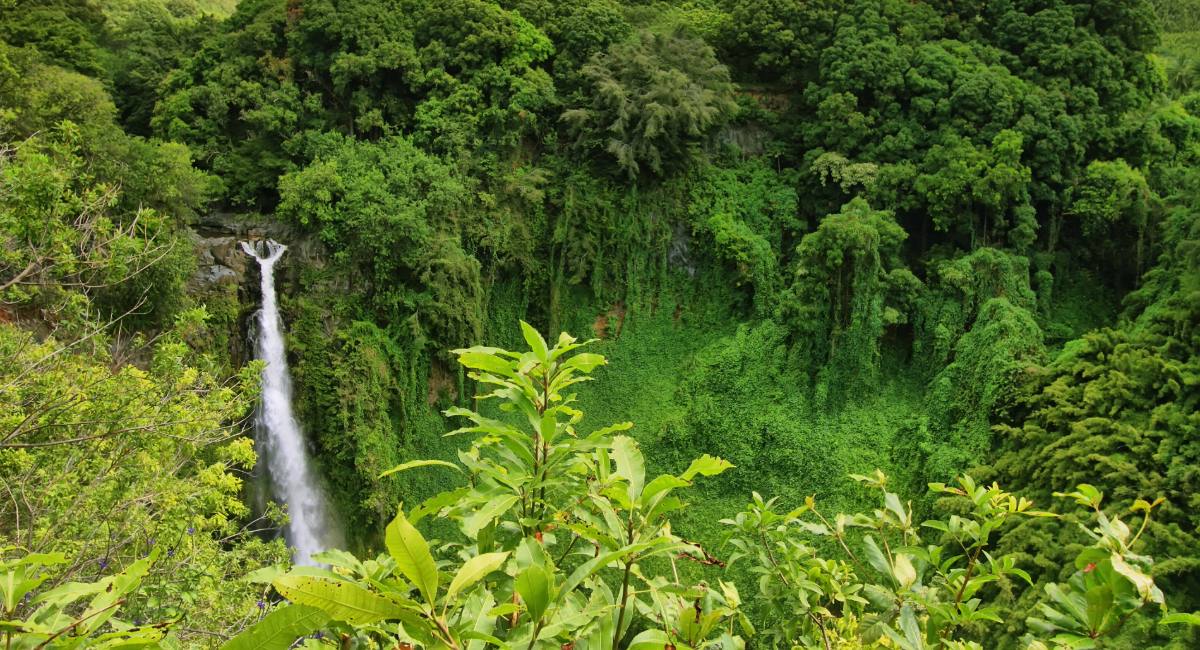
Maui’s year-round hiking weather is one of its greatest gifts, but timing your adventures can make the difference between a good hike and an unforgettable one.
Seasonal Considerations
Dry Season (April-October):
- Even during “dry season,” the Pipiwai Trail area sees rain almost 2/3 of the month
- Generally, less muddy conditions on most trails
- Warmer temperatures require more water and sun protection
- Better visibility for panoramic ridge hikes
Wet Season (November-March):
- More rain, especially during winter months, makes trails muddier and more slippery
- Cooler temperatures, especially at elevation
- Fuller waterfalls and more lush vegetation
- Humpback whale season adds wildlife viewing opportunities
Daily Timing Strategy
Start your hike early, ideally between 6 and 9 AM. Gate openings at spots like Kipahulu align with the best conditions: fewer crowds and serene, nearly empty trails. Hitting the trail even an hour or two later can drastically change your experience. Morning light adds a magical glow to bamboo forests and crater walls, creating unbeatable photo opportunities, and cooler temps make the uphill climbs far more pleasant.
By late morning and into the afternoon, trailheads become crowded and parking turns chaotic, especially after 2 PM. Overflow lots that look fine on a map often add unexpected distance and effort to your hike. Planning ahead helps you avoid the crowds and ensures your energy goes into the hike, not just reaching the trailhead.
What Gear Do I Need for Maui Hiking?

According to the National Park Service, proper preparation is essential for safe hiking in Hawaii’s diverse environments. The right gear can make all the difference between an epic adventure and an uncomfortable ordeal.
Essential Gear Checklist
Footwear:
- Hiking shoes with aggressive tread (not your athleisure sneakers)
- Water shoes or sturdy sandals for waterfall hikes
- Extra socks—trust me on this one
Clothing:
- Moisture-wicking shirts that dry quickly
- Lightweight, quick-dry shorts or pants
- Light jacket for bamboo forests and high-elevation hikes
- Hat with a chin strap (Maui’s trade winds are no joke)
Navigation & Safety:
- More water than you think you need (double it)
- High-energy snacks and lunch for longer hikes
- Reef-safe sunscreen (30+ SPF minimum)
- Insect repellent for bamboo forests and valley hikes
- First aid basics and emergency whistle
- Waterproof phone protection
Photography & Extras:
- Camera with extra batteries (phone batteries drain fast with GPS)
- Portable charger for longer adventures
- Waterproof bag for electronics
- Cash for parking fees at places like Twin Falls
The key is preparing for Maui’s microclimates. You might start in 85-degree sunshine, hike through cool, misty bamboo forests, and end up on an exposed ridge with serious wind. Layering isn’t just smart, it’s essential for comfort and safety.
Ready to Explore Maui’s Epic Hiking Trails?
Maui’s trails offer more than just exercise with a view; they’re invitations to connect with one of the world’s most beautiful and culturally rich landscapes. From mystical bamboo cathedrals to otherworldly volcanic craters, each trail tells a different story about this remarkable island.
Hiking on Maui is an opportunity to mālama ʻāina, showing respect for the land that has supported Hawaiian culture for over a thousand years. Pack smart, start early, prioritize safety, and prepare to create those “best day ever” memories that keep calling you back to Maui. And when you’re done hiking, treat yourself at a local café or farm stand; supporting Maui’s small businesses is another great way to show aloha.
Book your perfect Maui base camp with Maui Paradise Properties and wake up ready for your next hiking adventure. From oceanfront condos to upcountry retreats, find the ideal accommodation to complement your Maui hiking journey.
____________________________________________________________________________
____________________________________________________________________________
Frequently Asked Questions
Can I hike Haleakalā trails without a guide?
Absolutely! Most Maui trails, including the spectacular Waimoku Falls via Pipiwai Trail, are designed for self-guided exploration. The trails are well-marked with clear signage, though Haleakalā National Park does charge a $30 entrance fee per vehicle. That said, guided tours can add valuable cultural context and advice that transforms a nice hike into a deeper understanding of Hawaiian culture and ecology.
Are dogs allowed on Maui hiking trails?
Trail policies vary significantly. Haleakalā National Park prohibits dogs on most trails to protect native wildlife, but state forest reserves like Waihe’e Ridge Trail welcome leashed companions. Always check specific trail regulations before heading out. Nothing ruins a planned adventure like having to turn around at the trailhead.
What’s the difficulty level for families with young children?
The Pipiwai trail is suitable for kids aged 4-6, who can walk 3-4 miles and handle well-maintained trails with two shallow stream crossings. The key is choosing trails that match your group’s actual hiking experience, not their enthusiasm. Start with shorter options like Twin Falls or Kapalua Coastal Trail before committing to longer adventures.
How crowded do the trails get?
Popular trails like Pipiwai can get quite busy during peak hours, due to easy National Park access and the half-million annual visitors to Haleakalā National Park. The solution? Arrive early. That 9 AM strategy I keep mentioning isn’t just about parking, it’s about experiencing these places in the peace they deserve.
What about trail closures and safety updates?
Trail conditions change regularly due to weather, maintenance, and safety concerns. Always check the Haleakalā National Park website before heading out, and visit Naʻ Ala Hele Hawaii State Trails for state trail updates. Consider downloading current conditions to your phone before losing cell service on remote trails. Nature doesn’t follow our vacation schedules, so having backup plans keeps your hiking adventures flexible and safe.
Maui offers exceptional snorkeling with many world-class spots, including Molokini Crater, Honolua Bay, and Black Rock Kaʻanapali. Morning hours provide optimal conditions with calm waters and 150+ foot visibility at protected marine sanctuaries. Safety is paramount – check daily conditions reports and snorkel with a buddy, as snorkeling accounts for the highest drowning fatalities among Hawaii ocean activities. West and South Maui beaches offer year-round access with over 250 tropical fish species, Hawaiian green sea turtles, and pristine coral reefs suitable for all experience levels.
Where Can I Find the Best Snorkeling Spots on Maui Right Now?
The island’s premier snorkeling destinations offer experiences for every comfort level, from easily accessible shore spots to boat-only adventures that reveal Maui’s most pristine underwater sanctuaries.
1. Molokini Crater – #1 Underwater Paradise
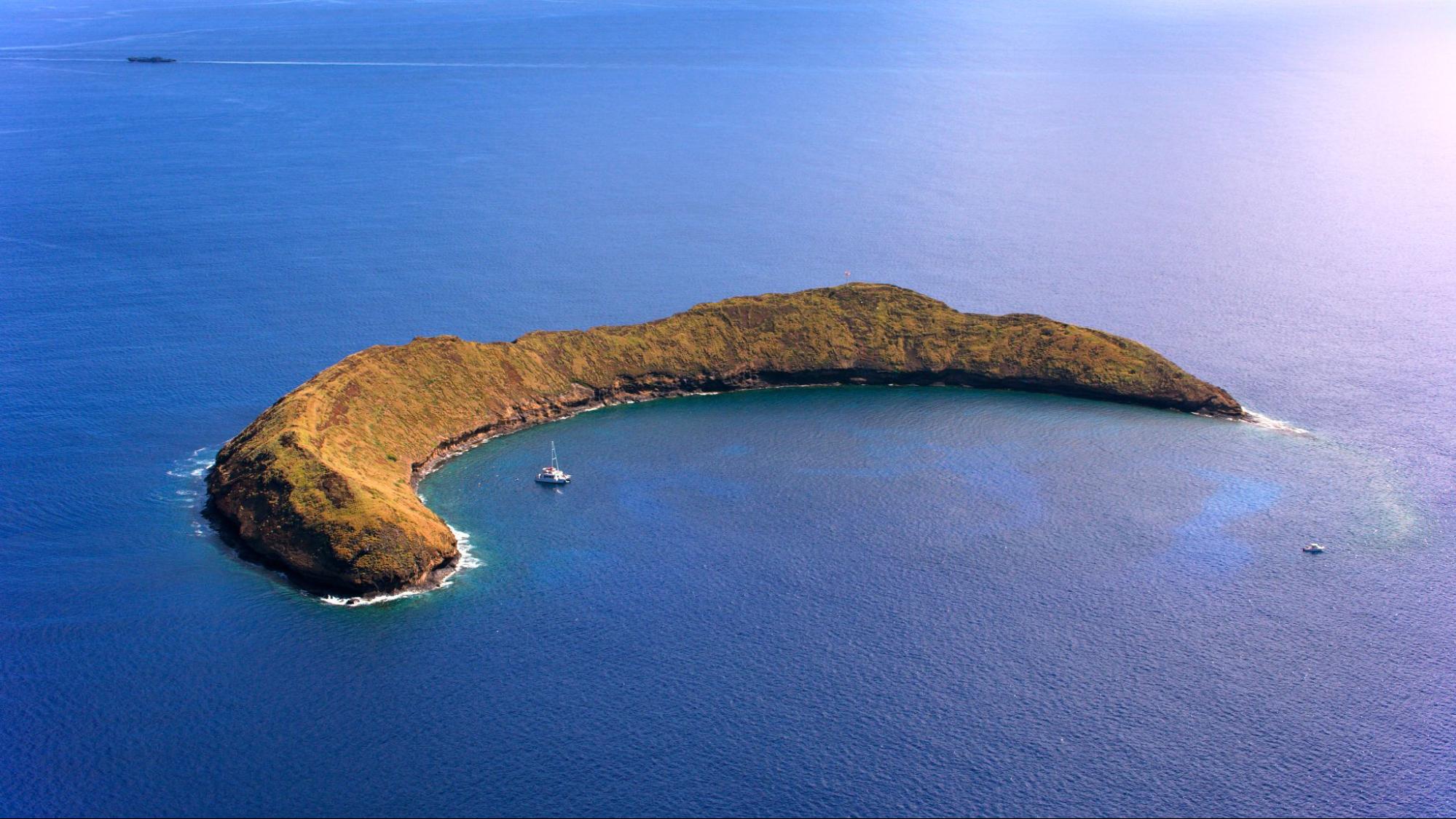
Picture yourself floating above what feels like an underwater cathedral—this crescent-shaped volcanic crater, born from fire 150,000 years ago, now cradles a marine sanctuary where visibility stretches beyond 150 feet. The water here holds a reverent stillness, broken only by the gentle flutter of parrotfish and the graceful dance of Moorish idols.
Marine Life: Parrotfish, butterflyfish, Moorish idols, trumpetfish, green sea turtles
Best For: All levels, photography, bucket-list experience
Current Conditions: Optimal visibility with calm morning conditions through summer 2025
2. Honolua Bay – Marine Life Conservation District
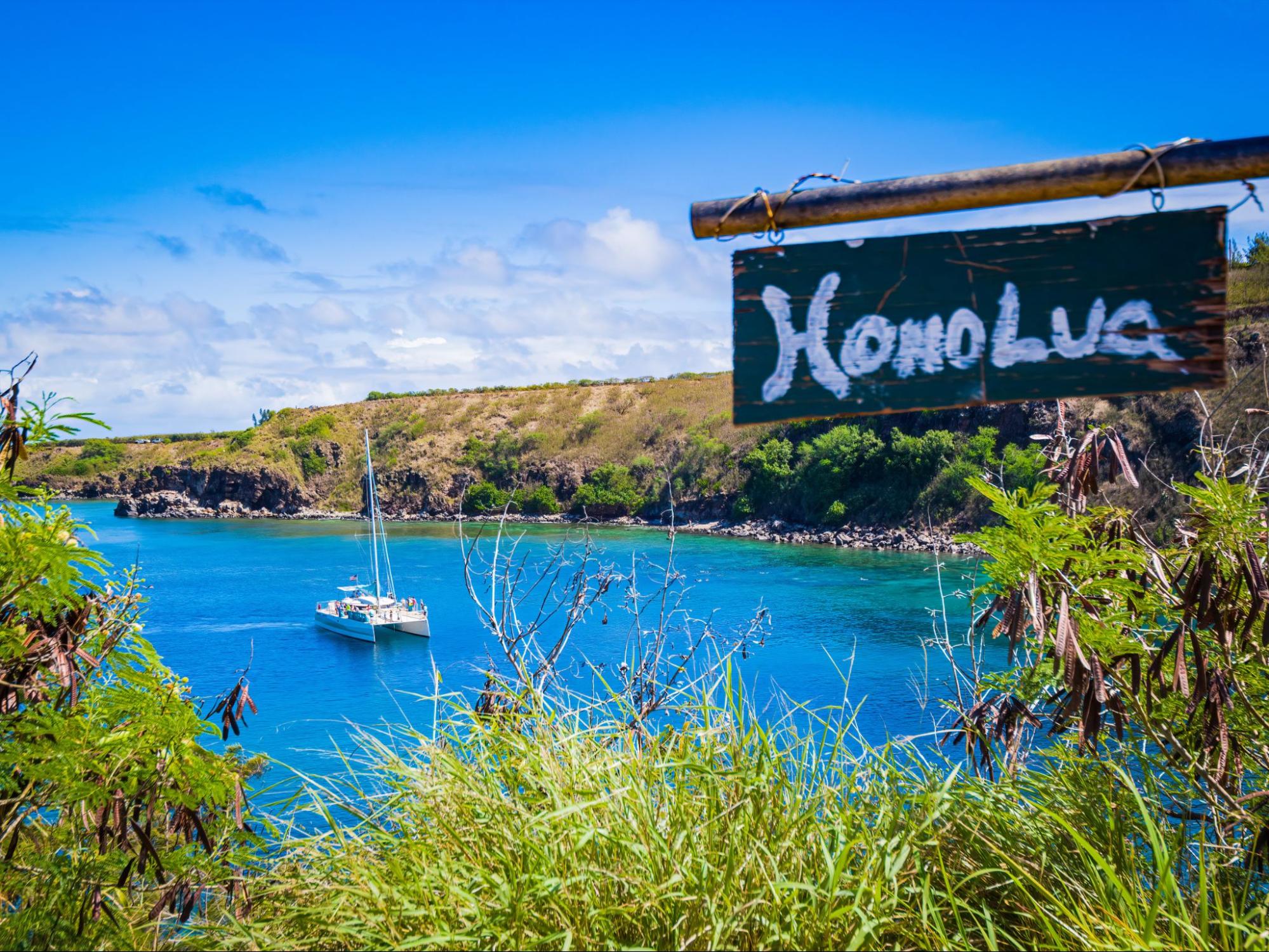
The short walk through ironwood trees to Honolua Bay feels like a pilgrimage to one of West Maui’s most treasured marine sanctuaries. This Marine Life Conservation District represents what happens when we choose protection over exploitation—thriving fish populations and coral gardens that shimmer with life.
Access: 5-minute walk from roadside parking
Best Time: Mid-summer, when conditions are calm; winter brings large swells
Marine Life: Diverse fish populations, eels, Hawaiian green sea turtles
3. Black Rock (Kaʻanapali Beach) – Iconic Lava Formation
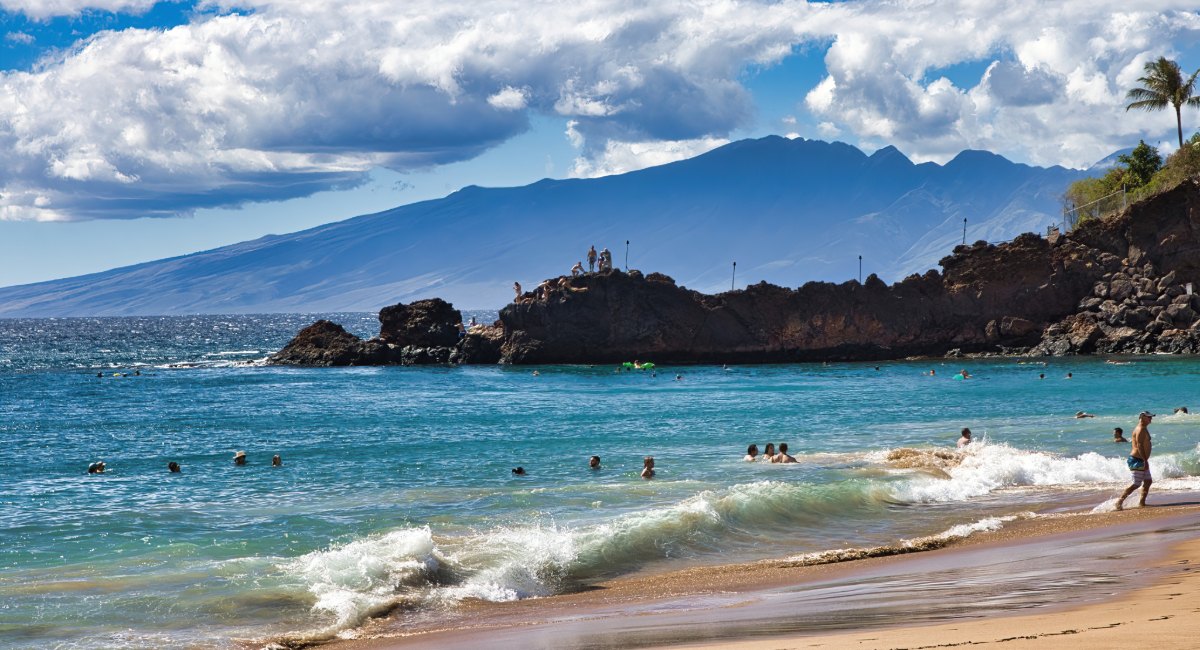
At Pu’u Keka’a, the ancient volcanic formation known as Black Rock, you’re snorkeling in waters steeped in Hawaiian legend. This is where souls of the departed were believed to leap into the spiritual realm—a reminder that these aren’t just pretty places, but locations of profound cultural significance.
Current Conditions: Calm winds with small shore break; watch for surge along rocks
Marine Life: Trumpetfish, Hawaiian state fish, butterflyfish, goatfish, sea turtles
Safety Note: Stay close to shore; avoid snorkeling directly under the rock
What Are the Best Family-Friendly Snorkeling Beaches in Maui?
Kapalua Bay and Kahekili Beach Park provide easy water entry, calm conditions, and beach amenities perfect for families with children and beginner snorkelers. Snorkeling is easily one of our most recommended family-friendly activities on Maui.
4. Kapalua Bay – Crescent-Shaped Paradise
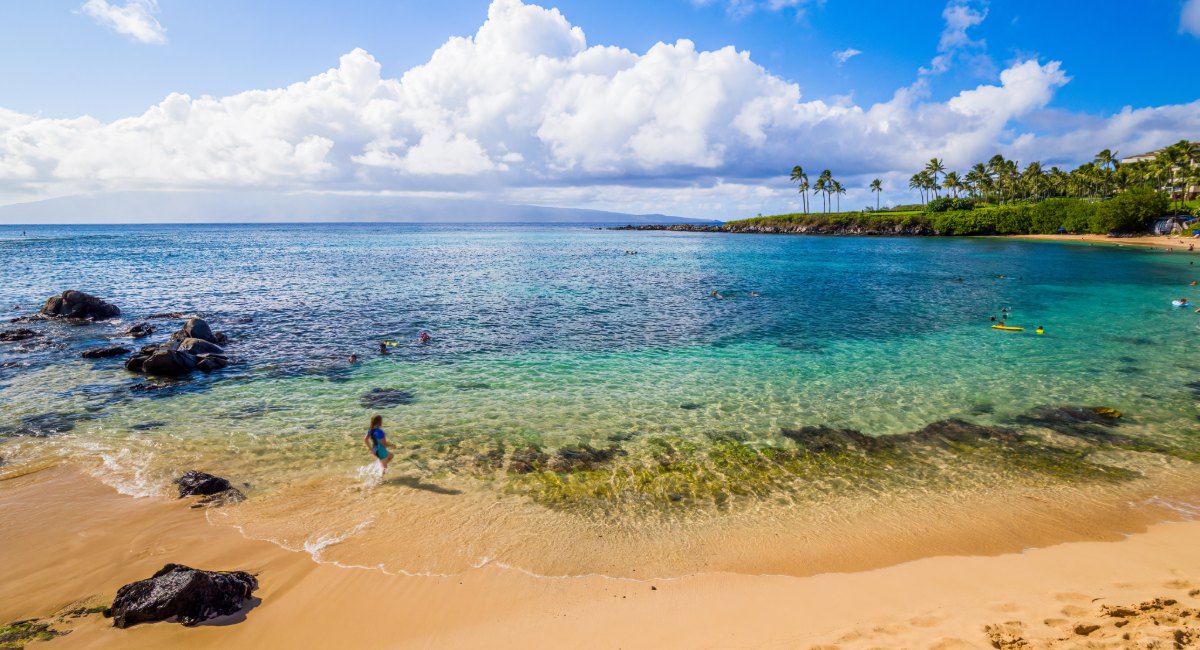
This crescent-shaped bay cradles families in its protective arms, where golden sand meets turquoise water in perfect harmony. The bay’s natural design creates a sense of security—lava rock formations guide you toward marine life while keeping conditions gentle.
Features: Protected bay, sandy bottom center, lava rock formations on sides
Marine Life: Sea turtles, needlefish, parrotfish, humuhumunukunukuapuaʻa
Amenities: Beach facilities, rentals, easy parking
5. Kahekili Beach Park (Airport Beach) – West Maui Gem
Sometimes called Airport Beach, this West Maui gem embodies the spirit of local beach parks—places where families gather, keiki learn to love the ocean, and visitors experience authentic island life. The expansive parking and facilities speak to thoughtful planning that serves everyone.
Best For: All-day family outings, beginners
Current Status: Calm conditions with very low winds and minimal surf
6. Ulua Beach – South Maui Family Favorite
Between luxury resorts lies this accessible gem where the rocky headland creates natural protection and underwater interest. Winter brings an unexpected gift—the haunting songs of humpback whales echoing through the water, a reminder of the Pacific’s greater migrations.
Special Feature: Haunting humpback whale songs are audible underwater during winter months
Access: Between luxury resorts with full amenities
Which Snorkeling Spots Offer the Best Chance to See Sea Turtles?

Hawaiian green sea turtles, or honu, hold special significance in Hawaiian culture as symbols of good luck, endurance, and long life. Turtle Town near Wailea and Maluaka Beach (Turtle Town area) provides the highest probability for Hawaiian green sea turtle encounters at dedicated cleaning stations.
7. Turtle Town – Dedicated Turtle Cleaning Station
The underwater lava formations near Wailea serve as cleaning stations where honu come for spa treatments from small fish. Watching this ancient ritual reminds you that you’re witnessing relationships that predate human presence on these islands.
Access: Boat tours only from the Wailea area
Marine Life: Hawaiian green sea turtles, butterflyfish, triggerfish, eagle rays, eels
Current Conditions: Calm waters with excellent visibility through 2025
8. Maluaka Beach – “Turtle Town” Area
South of Wailea, this beach requires no special skills—just patience and respect. Following the lava-rock coastline often reveals honu grazing on seaweed, a meditation on the slower rhythms of ocean life.
Strategy: Follow lava-rock coast extending from the beach end as conditions allow
Best For: Turtle watching, calm water swimming, family outings
Where Can Experienced Snorkelers Find Advanced Underwater Adventures?
For those comfortable in deeper waters, Maui offers underwater landscapes that challenge and inspire—places where adventure meets responsibility. Five Caves at Makena Landing offers experienced snorkelers magical underwater cave systems with white tip reef sharks, while Coral Gardens provides pristine reef formations.
9. Five Caves (Makena Landing) – Advanced Cave System
The underwater lava formations here create three distinct cave experiences: the “sand cave” where white tip reef sharks rest, the “bubble cave” with its natural air pocket, and the “mini cathedral” where sunbeams create stained-glass effects through the water.
Experience Required: Advanced snorkeling/diving skills
Marine Life: White tip reef sharks, lobsters, eagle rays, manta rays, and bottlenose dolphins.
Access: Dirt parking at 5034 Makena Road; no lifeguards or amenities
10. Coral Gardens – Hidden West Maui Gem
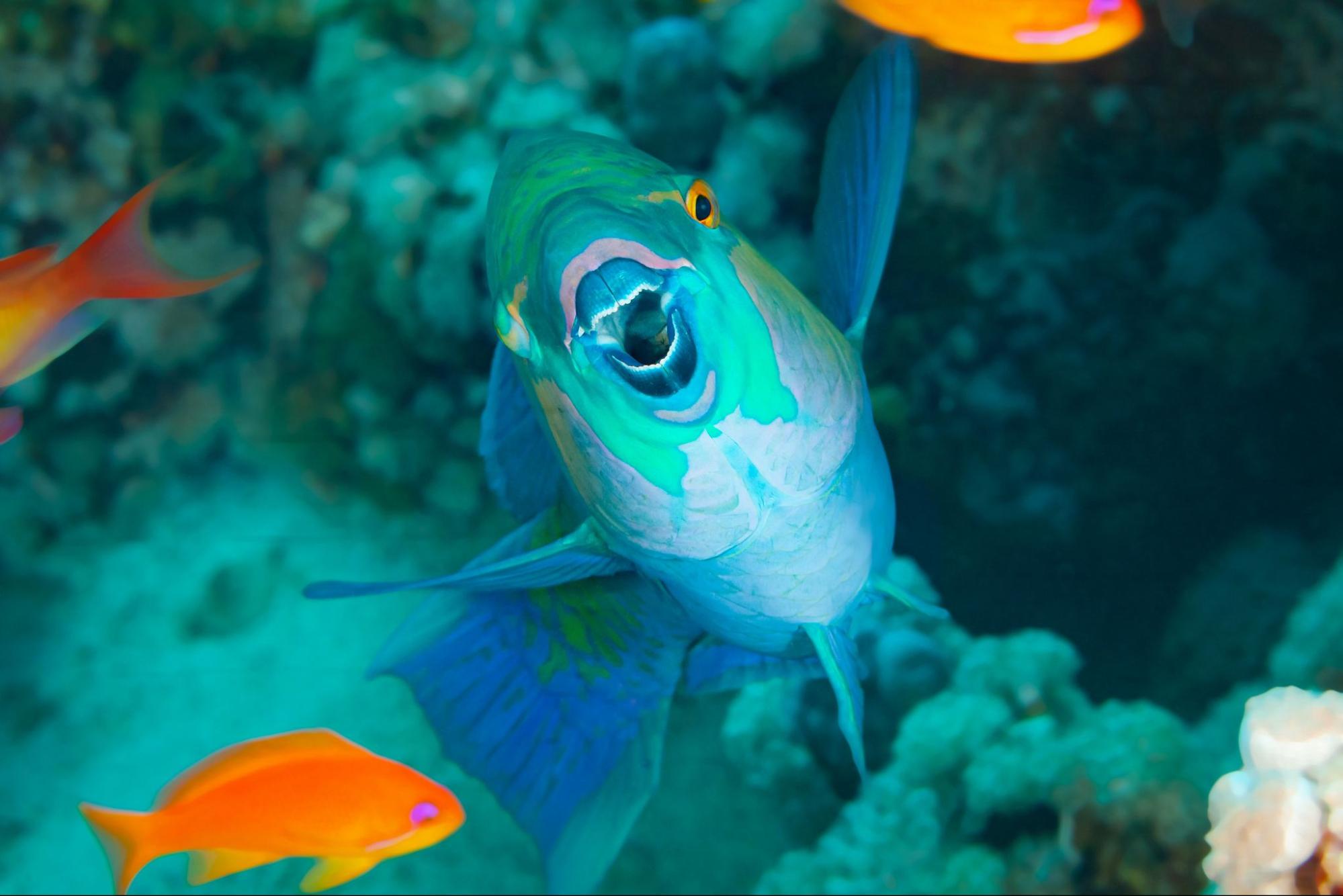
Along West Maui’s dramatic coastline, black lava fingers extend into the ocean, creating secret coral caves and passageways. This spot rewards exploration while demanding respect for its delicate ecosystem.
Features: Reef formation from Papalaua Beach to cliffs, underwater passageways.
Marine Life: Angel fish, butterfly fish, parrot fish, triggerfish, octopus, moray eels
What About Current Ocean Conditions and Safety in 2025?
Current Maui conditions show warm mid-80s temperatures with moderate trade winds; however, snorkeling remains Hawaii’s most dangerous ocean activity, requiring constant vigilance.
Current Safety Updates (2025)
Hawaii Ocean Safety reports that snorkeling accounts for more visitor drownings than any other activity, emphasizing the critical importance of the buddy system, proper equipment, and condition assessment.
Daily Condition Resources:
- Boss Frog’s Daily Snorkel Report (updated 6 AM daily)
- Hawaii Beach Safety website for nine lifeguarded beaches
- Maui 24/7 and MauiNow Facebook surf forecasts
Essential Safety Protocol:
- Snorkel only with experienced ocean swimmers using the buddy system
- Optimal conditions occur during morning hours with calm waters
- Check daily surf and wind reports before entering the water
- Avoid full-face masks; use traditional snorkel equipment from licensed vendors
- Wait at least 12–24 hours after flying before snorkeling or diving—changes in pressure and fatigue can increase the risk of decompression sickness and shallow water blackout
- Please remember to avoid standing on coral and never feed marine life—help protect these living ecosystems for future generations.
Additional Premium Snorkeling Destinations
11. Keawakapu Beach – Marine Life Abundance
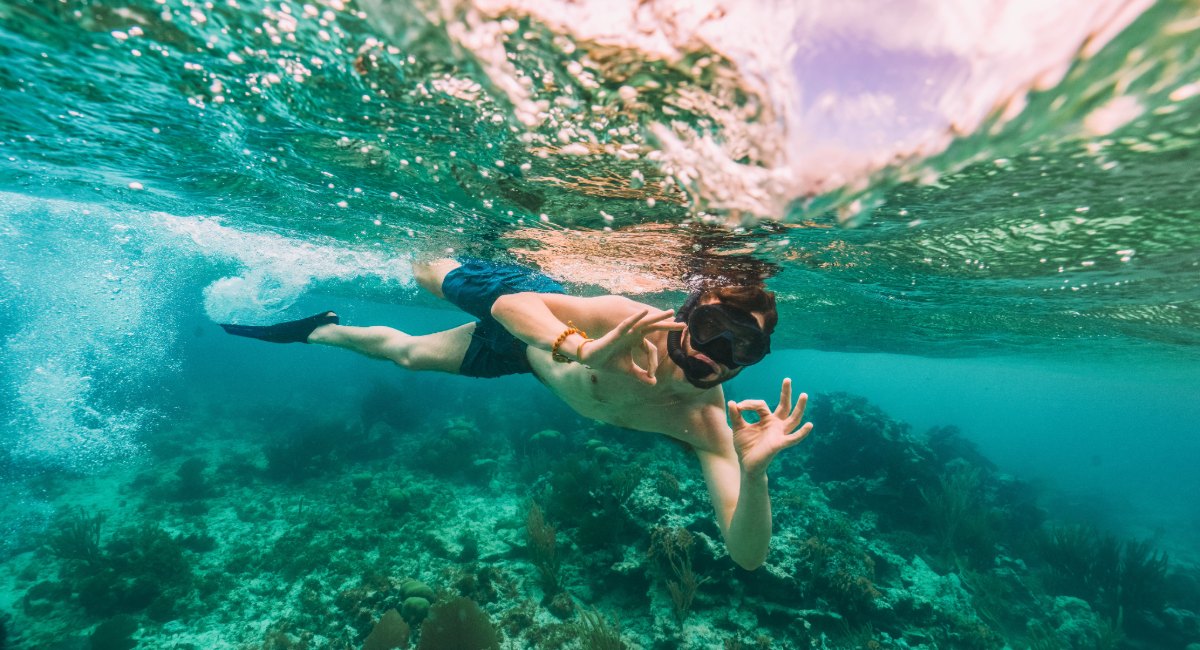
Located steps from Mana Kai Maui Resort, lava fingers on the right side create prime habitat for diverse fish populations and marine life.
12. Napili Bay – Calm Shallow Waters
Perfect for families and beginners with abundant fish populations in calm, shallow, clear waters, providing a stress-free snorkeling experience.
13. Olowalu Reef – Hawaii’s Oldest Reef
One of Hawaii’s oldest and largest reefs features pinnacle formations home to sea turtles, rays, tropical fish, and reef sharks.
14. Mokuleia Bay
The Marine Life Conservation District was designated in 1978 with pristine snorkeling, though winter waves can create rough conditions requiring strong swimming skills.
15. Wailea Beach – Resort Area Luxury
Outstanding beach regularly voted among the world’s top beaches, perfect for groups mixing snorkeling with premium beach relaxation at Grand Wailea and Four Seasons.
Snorkeling Tours vs. Shore Access: Which Should You Choose?
Maui’s unique advantage includes extensive shore access to top snorkeling spots, unlike many global destinations that require expensive boat transportation for quality reef access.
When to Choose Tours:
- Molokini Crater access (boat-only with 150+ foot visibility)
- Small-group eco-rafting for personalized marine naturalist education
- Winter whale watching combinations (December-April)
- Equipment provision and safety supervision
Shore Snorkeling Advantages:
- Free beach access without schedule restrictions or cancellations
- Flexible timing for optimal morning conditions
- Multiple spot exploration in a single day
- Cost-effective for extended stays
Seasonal Considerations and Best Timing
Peak Season Analysis
Optimal snorkeling season runs mid-April through November, with calmer waters and peak visibility, especially during summer months.
Current Recommendations:
- April, September, and October offer perfect temperatures with fewer crowds
- December-April focuses on whale watching with snorkeling as a secondary activity
- The May-November transition emphasizes snorkeling and vibrant marine life activity
- Winter months bring large north swells, making snorkeling hazardous or inaccessible on the North Shore (e.g., Honolua Bay), while South Shore locations (e.g., Wailea, Makena) are generally calmer. In summer, conditions reverse—South Shore may see larger waves, and North Shore snorkeling improves.
Essential Gear and Equipment
2025 Equipment Standards:
Modern tours provide sanitized equipment, including fins, masks, snorkels, flotation devices, and reef-safe sunscreen for environmental protection.
Recommended Gear Specifications:
- Silicone comfort-fit mask with anti-fog treatment
- Traditional snorkel equipment over full-face masks for safety
- Vented fins for efficient movement
- Reef-safe sunscreen (required by law)
- Flotation vest for beginners
Experience Maui’s Underwater Paradise Today
Ready to explore Maui’s world-class snorkeling destinations? Whether you’re seeking family-friendly beaches, turtle encounters, or advanced underwater cave systems, Maui’s diverse marine environments offer unforgettable experiences for every skill level.Browse our special deals on Maui Vacation Rentals to find your perfect home base for daily snorkeling adventures, or explore our Maui area guide for comprehensive island exploration planning.
Commonly Asked Questions About Snorkeling on Maui
What’s the safest snorkeling spot for beginners on Maui?
Kapalua Bay offers the easiest snorkeling conditions with marine life abundant very close to shore, typically calm morning conditions, and easy water access perfect for first-time snorkelers.
When is the best time of day to snorkel in Maui?
Morning hours provide optimal snorkeling conditions with calm waters, increased visibility, more active marine life, and lighter winds before afternoon trade wind patterns develop.
Can I see sea turtles while snorkeling from the beach?
Yes, Turtle Town, Maluaka Beach, and Black Rock consistently offer Hawaiian green sea turtle encounters, though remember these are wild animals with no guaranteed sightings.
Do I need a tour to snorkel Molokini Crater?
Yes, Molokini Crater is only accessible via approved boat tours due to its offshore location and protected marine sanctuary status.
What should I do if snorkeling conditions look dangerous?
Never enter water with high surf, strong currents, or murky visibility. Check with lifeguards, assess conditions carefully, and choose alternative protected locations when primary spots show dangerous conditions.
Maui parasailing operates seasonally from May 16 to December 14, departing from Ka’anapali Beach and Lahaina Harbor, with flights reaching heights of 800-1,200 feet above the Pacific Ocean. UFO Parasail and West Maui Parasail offer 1-hour experiences starting at $89, including 8-12 minutes of actual flight time. Hydraulic winch systems ensure safe, dry boat landings. Participants must be 5+ years old and weigh 160+ pounds for solo flights, with tandem and triple options available up to 450-550 pounds combined weight. Advanced booking is recommended as operations close during humpback whale season for marine protection.
There’s nothing quite like floating 1,200 feet above the Pacific while watching humpback whales breach below you. As someone who’s spent countless hours on these waters, I can confidently say parasailing is one of those ‘you have to do it to believe it’ experiences. But here’s what most tourists don’t know: timing is everything
When is the Best Time to Go Parasailing on Maui?
Maui parasailing operates seasonally from May 16th through December 14th, closing during humpback whale migration season to protect marine life.
Seasonal Schedule
The parasailing season strategically take a break between December 15 to May 15. During humpback whale season, our waters become a nursery for these gentle giants, so we respectfully close operations to give them space. Trust me, you’ll want to time your visit right – if you’re planning a spring break Maui adventure, you’re hitting the sweet spot for perfect parasailing conditions.
Optimal Conditions:
- Best Months: May through September, with consistent trade winds and clear skies
- Daily Timing: Departures available every hour starting at 9:00 AM throughout the day
- Weather Dependency: Operations may be canceled or rescheduled due to unsuitable wind or sea conditions
Where Can I Go Parasailing on Maui?
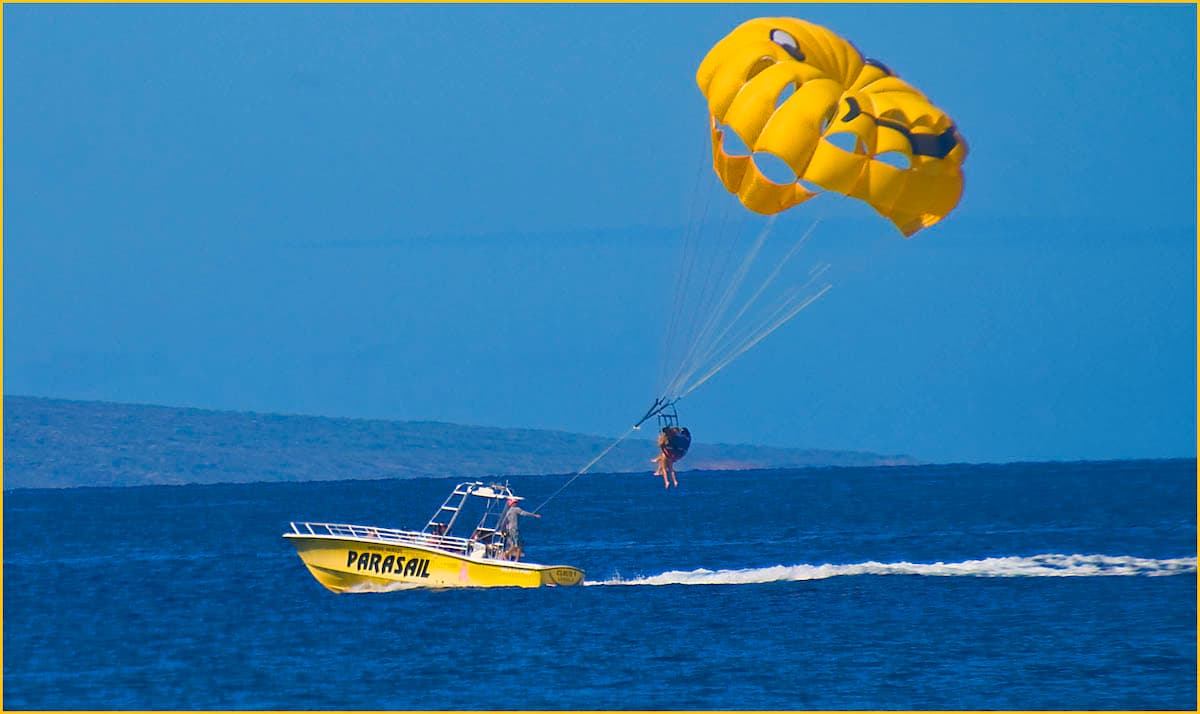
Maui parasailing operates from two primary locations: Ka’anapali Beach and Lahaina Harbor, both on the western shore.
Ka’anapali Beach – Premier Location
I always tell first-timers to look for those bright blue umbrellas on Ka’anapali Beach – you literally can’t miss them. They’re right in front of Leilani’s (grab a mai tai there after your flight, by the way). What I love about this setup is that you’re already on one of Maui’s most stunning beaches, so even your check-in feels like part of the vacation
Location Advantages:
- A pristine 3-mile stretch of white sand beach with crystal-clear waters
- Easy access from major resort strip accommodations
- Panoramic views of the West Maui Mountains and neighboring islands
- Protected waters are ideal for safe parasailing operations
Lahaina Harbor – Historic Setting
West Maui Parasail operates from historic Lahaina Harbor at slip #15, providing access to a vibrant harbor atmosphere.
Harbor Benefits:
- Stunning coastal views during parasailing flights
- Historic town setting with shops, restaurants, and art galleries
- Direct boat departure from established marina facilities

How Much Does Parasailing Cost in Maui?
Current 2025 pricing starts from $89-99 for parasailing flights and $65 for non-flying observers.
Look, we get it – vacation expenses add up fast. But at $89-99 for a flight that’ll give you memories for a lifetime? That’s less than what you’d spend on dinner for two at most resort restaurants. Plus, if you’re active military or a veteran, you get good discounts (50% and 25% respectively). Pro tip: if you’re planning a romantic Maui honeymoon, the tandem flight is absolutely worth the splurge
Pricing Structure
Flight Options:
- 800-Foot Flight: Singles (8 minutes), Tandems/Triples (10 minutes)
- 1,200-Foot Flight: Singles (10 minutes), Tandems/Triples (12 minutes)
- Observer Tickets: $65 for non-flying boat passengers
Additional Costs:
- Photo packages: $40 for 40 photos on a digital drive
- Professional photo/video packages: $39+ tax, or $68+ tax for both options
Available Discounts:
- Active duty military: 50% discount, veterans and dependents: 25% discount
- Automatic daily discounts up to 15% off are available at select times
What Are the Safety Requirements for Maui Parasailing?
Parasailing safety has improved significantly since 2013 with increased regulation and strict equipment maintenance standards.
I know some people get nervous about parasailing. Some of my own friends were terrified until they tried it. Here’s the thing: modern parasailing is incredibly safe. The Parasail Safety Council reports it’s statistically safer than driving to the beach. The hydraulic winch systems mean you take off and land right on the boat – no scary water starts or crashes. Even my friends who can’t swim love it because you’re secure in that harness the entire time.
Age and Weight Restrictions
Participants must be at least 5 years old to parasail or ride as paying observers, with a minimum solo weight of 160 pounds.
Weight Guidelines:
- Solo Flights: 160-165 pounds minimum (varies by operator)
- Tandem Flights: Maximum combined weight 450-550 pounds
- Triple Flights: Maximum combined weight 450-550 pounds
- Captain’s Discretion: Weight limits may be adjusted based on wind and sea conditions
Medical and Safety Restrictions
Safety guidelines prohibit expecting mothers, people with back problems, and require all participants to be 7+ years old.
Safety Equipment:
- State-of-the-art boats with USCG certification
- Life jackets and safety harnesses are provided for all participants
- Hydraulic winch systems for safe take-off and dry boat landings
Which Maui Parasailing Operators Should I Choose?
UFO Parasail – Industry Leader
Company Profile:
- Experience: Operating since 1985 with nearly 1 million passengers served
- Fleet: USCG-certified boats accommodating up to 12 passengers
- Locations: Ka’anapali Beach and Big Island operations
- Reputation: 99% of travelers recommend with a 5.0-star rating from 155+ reviews
West Maui Parasail (Lahaina Parasail)
Operator Details:
- Five five-boat fleet, including two 31-foot Ocean Pro parasail boats and three custom-built 6-passenger boats
- Dual locations at Ka’anapali Beach and Lahaina Harbor
- Professional crew with emphasis on safety and customer experience
How Long Does a Parasailing Experience Last?
Total parasailing experiences last 45 minutes to 1 hour, with actual flight time ranging from 8-12 minutes depending on package selection.
Experience Timeline
Pre-Flight (15-20 minutes):
- Safety briefing and equipment orientation
- Boat departure from the beach or the harbor
- Travel to the optimal parasailing location
Flight Duration:
- 800-Foot Flights: 8 minutes (solo), 10 minutes (tandem/triple)
- 1,200-Foot Flights: 10 minutes (solo), 12 minutes (tandem/triple)
- Ocean Dip: Optional refreshing water touch during flight
Return Journey (15-20 minutes):
- The hydraulic winch system ensures dry landings back on the boat
- Return trip with scenic water views
- Photo viewing and purchase opportunities
What Views Can I Expect While Parasailing?
From 1,200 feet above the Pacific, parasailers enjoy panoramic views of Maui’s west side, neighboring islands, and the West Maui Mountains.
Okay, prepare yourself – the views from up there will literally take your breath away. On a clear day, you can see all the way to the Big Island! And if you’re lucky enough to go in early December, you might spot whale spouts from your aerial perch. It’s like having the best seat in the house for nature’s greatest show
Natural Landmarks:
- West Maui Mountains’ dramatic peaks and valleys
- Neighboring island,s including Lanai and Molokai dot the horizon
- Crystal-clear turquoise waters extending to the horizon
- A three-mile stretch of Ka’anapali Beach’s white sand coastline
Seasonal Wildlife Viewing:
- Early December: Potential humpback whale sightings during migration start
- Opportunity to see whale spouts and rolls from an aerial vantage point
- Marine life, including dolphins and sea turtle,s in clear waters below
Is Parasailing Safe for Non-Swimmers and Families?
Non-swimmers can safely parasail as participants receive life jackets and safety harnesses, with take-off and landing occurring on boats rather than in water.
Parents always ask me about this – ‘Is it really safe for kids?’ Absolutely!
Family-Friendly Safety Features
Child Accommodations:
- Family-friendly activity suitable for children as young as 5 years old
- Children under 18 require a parent or legal guardian’s signature on the liability waiver
- Tandem and triple flights allow families to experience together
Safety Protocols:
- According to Parasail Safety Council, statistically very safe activity with 2.4 fatalities per year average (1982-2012) compared to 150 annual coconut-related deaths
- Professional crew training and equipment maintenance
- Weather monitoring and trip cancellation protocols
How Do I Book and Prepare for Parasailing?
Here’s my booking strategy: book early, especially if you’re visiting during peak season. Weather can be unpredictable (welcome to tropical paradise!), so that 24-hour cancellation policy is a lifesaver. I always tell guests to schedule parasailing early in their trip – that way, if weather doesn’t cooperate, you have backup days. And definitely validate your parking at Whaler’s Village by grabbing a coffee or snack – those parking fees add up quick!
Booking Recommendations
Advance Planning:
- Book early during peak season (June-August, December)
- 72-hour notice required for refunds, with exceptions only for doctor’s notes
- Flexible scheduling is recommended due to weather dependency
What to Bring:
- Swimsuit (recommended for potential ocean dip)
- Reef-safe sunscreen and sunglasses with a strap
- Personal GoPro cameras permitted over a life jacket and harness at your own risk
- Cash for photo packages and tips
Check-In Process
Ka’anapali Location:
- Arrive 30 minutes prior to tour time for check-in
- Parking is available at Whaler’s Village with validation from shops/restaurants, reducing rates
- Look for the operator’s colored umbrellas on the beach
Create Your Perfect Maui Adventure
Look, I could write about parasailing all day, but nothing I say will compare to that moment when you’re floating silently above the Pacific, watching Maui unfold beneath you. It’s pure magic. Ready to add this to your adventure list?
If you’re still planning your perfect Maui itinerary, parasailing pairs perfectly with other West Maui activities. And speaking of planning – you’ll want to stay somewhere convenient to both parasailing locations. Our West Maui vacation rentals put you right in the heart of the action, often just a short walk from those blue umbrellas on Ka’anapali Beach.
Want to explore more water adventures? Check out our complete guide to Maui waterfalls for your land-based thrills, or browse our things to do in Maui for even more island inspiration.
Frequently Asked Questions About Parasailing on Maui
Can I take photos while parasailing?
Yes, personal cameras and GoPros are permitted when securely attached over safety equipment. Professional photo packages are also available for $39-68, providing high-quality images and videos of your experience.
What happens if weather conditions are poor?
Parasailing is weather-dependent, and operators prioritize safety. Trips may be rescheduled or canceled due to unsuitable wind or sea conditions, with full refunds typically provided for weather-related cancellations.
Can people with a fear of heights parasail?
Many first-time parasailers with height concerns report positive experiences due to the smooth, gentle nature of the activity. The gradual ascent and peaceful floating sensation often feels less intimidating than expected.
Are there weight restrictions for tandem flights?
Yes, tandem and triple flights have maximum combined weight limits of 450-550 pounds. Solo flights require a minimum weight of 160-165 pounds. Captains may adjust these limits based on current conditions.
How high do you actually go parasailing?
Maui operators offer two height options: 800 feet (approximately 50 stories) and 1,200 feet (approximately 75 stories) above sea level, providing spectacular panoramic views of the island and the surrounding ocean.
Following the devastating wildfires in Lāhainā, Maui beckons today’s travellers with optimism and gratitude for their mindfulness during this period of recovery. While the charm and allure of Maui remains, it is our kuleana (responsibility) for travel agencies and visitors alike to adopt thoughtful and sustainable practices to aid in the island’s healing process.
Here’s a comprehensive guide to navigating a meaningful and considerate journey to Maui post-wildfire.
Stay Informed:
Stay updated on the ongoing recovery efforts and areas impacted by the wildfires. Utilize reliable sources like local government websites, social media platforms, and news outlets to obtain current information. This will ensure safety, preparation and allow visitors to contribute positively during their stay.
Support Local Businesses:
Many local businesses have endured immense hardship since the wildfires. Consider supporting them by shopping local, dining at locally owned eateries, and employing local tour guides. It’s an opportunity to immerse in the authentic Maui culture while propelling economic recovery.
Respect Closed Areas:
Some areas may still be recuperating and are temporarily closed for public safety and restoration. Respect all signage and barriers, ensuring that recovery efforts are unhampered and natural habitats are restored.
Eco-friendly Accommodations:
Opt for accommodations that are committed to sustainability. Many hotels and resorts in Maui are involved in eco-friendly practices that minimize environmental impact. Supporting such establishments accentuates the collective eco-conscious efforts.
Voluntourism:
Engage in voluntourism by participating in organized clean-up and restoration projects. Lending a helping hand not only enriches the travel experience but also accelerates the healing process of the affected areas.
Minimize Carbon Footprint:
Utilize public transportation, bikes, or walking to explore Maui. If renting a vehicle is essential, consider eco-friendly options like hybrids or electric vehicles. Be mindful of energy consumption, waste generation, and water usage to lessen the environmental impact.
Wildlife Conservation:
Respect and protect Maui’s diverse wildlife. Maintain a safe distance, avoid feeding or disturbing animals, and be vigilant about not leaving any trash behind that could harm them.
Traveling to Maui post-wildfire offers an unparalleled opportunity to be part of the island’s revival. By adopting responsible practices, tourists and travel agencies can contribute to a robust recovery, ensuring that Maui’s natural splendor is preserved for generations to come. Let’s embark on this journey with mindfulness and commitment, ensuring our path to paradise is paved with care, respect, and sustainability.
10 Commonly Asked Questions about travelling to Maui in 2023/2024
Yes, it is safe to travel to Maui after the recent wildfires. Maui is incredibly diverse. While some areas may have been affected by wildfires, many others offer safe and enjoyable travel experiences. To ensure the latest safety information and recommendations for your trip, check updates from local authorities and government travel advisories.
Some accommodations in West Maui may be impacted by the wildfires. For accommodation status, it’s best to contact your hotel or accommodation provider directly for the most current information and consider alternatives if necessary. Maui Paradise Properties has a range of accommodations in different locations across the island.
Many attractions are currently open for visitors to enjoy on Maui. Stay updated on open attractions by visiting the official Maui Tourism website or contacting local tourism offices. See below for a list of helpful resources.
For the latest air quality information following the wildfires, check local air quality reports and health advisories provided by the State government or Department of Health for current conditions.
There may be restrictions to ensure the safety of residents and visitors. We appreciate your compliance with any designated restricted areas and recommendations provided by local authorities.
There are many ways to positively contribute to the local community. Consider supporting local businesses and nonprofits that are aiding in recovery. If you’re passionate about giving back, you can explore the various volunteer opportunities Maui island offers. See below for a list of helpful resources.
Stay informed on any impacts to transportation access by checking updates with local authorities, such as the Hawaiʻi Department of Transportation to ensure a smooth and safe trip.
Maui is known for its breathtaking beaches including Kaʻanapali and Makena’s Big Beach. With a wide range of water-based activities available on island, it is always important to check conditions before entering the water for your safety. Discover Maui’s world famous beaches and review ocean safety tips before venturing in the water.
Wildlife habitats may be affected. Maui is home to many beautiful yet threatened and endangered species like the hawksbill sea turtle (honuʻea) and the Hawaiian green sea turtle (honu). Be mindful and respectful when exploring natural areas, and follow guidance from wildlife organizations and authorities.
Local government websites, news outlets, and official social media channels are excellent resources for current information. The Hawaii Tourism Authority website can also provide updates to Maui’s ongoing recovery.
Important Resources for Travelers:
- Hawaii Tourism Authority
- Maui’s world famous beaches
- Support local
- Volunteer opportunities
- Hawaiʻi Department of Health
- Hawaiʻi Department of Transportation
- Check beach conditions
- Ocean safety tips
- Learn about Maui’s wildlife
Aloha, foodie friends! Buckle up for a tantalizing culinary journey set in paradise. Don’t let the ubiquity of “Aloha shirts” and tiki torches fool you. West Maui is not just a tropical wonderland famed for its azure waters, captivating sunsets, and stunning West Maui rentals. Oh no, as we’re about to show you, it’s a hidden wonderland for foodies and connoisseurs of culinary delight! We’re peeling back the layers of this Polynesian paradise to take you on the ultimate West Maui foodie adventure.
So, pack your sunscreen and your appetite because we’re setting sail to an archipelago of flavor, where every stop is a taste bud extravaganza. So, let’s get this tropical gourmet journey underway!
Taste The Flavors of West Maui
West Maui is a tropical paradise with a vibrant culinary scene. With so many delicious cuisines from around the world available here, your taste buds will be dancing all vacation long. So whether you’re seeking a delicious seafood dish by the ocean, a succulent steak in a gourmet restaurant, or good old fashioned American comfort food, West Maui has it all. Here are some of out top restaurant picks;
Seafood
Merriman’s Kapalua:Situated on a beautiful oceanfront location in Kapalua, Merriman’s offers a farm-to-table dining experience with a focus on fresh seafood. Their menu changes based on the availability of local ingredients. The restaurant has been recognized for its commitment to sustainable seafood.
Lahaina Fish Co.: Located in the historic town of Lahaina, Lahaina Fish Co. is a must-visit for seafood enthusiasts. With a menu full of locally sourced ingredients, this restaurant is perfect for enjoying a delightful meal with an ocean view.
Mala Ocean Tavern; The Mala Ocean Tavern is located right on the water in Lahaina, and offers a menu that is a blend of Mediterranean and Hawaiian influences. Their seafood dishes, such as seared ahi bruschetta and seafood pasta, are highly regarded.
Hawaiian and Polynesian
Old Lahaina Luau: For an authentic Hawaiian experience, Old Lahaina Luau is the place to be. Not just a restaurant, it’s an entire cultural experience with traditional Hawaiian cuisine, hula dancing, and storytelling.
Hula Grill Kaanapali: Situated in Whalers Village, Hula Grill offers a blend of Hawaiian-inspired dishes. The open-air setting provides an ideal backdrop for enjoying dishes like Huli Huli Chicken or Poke Tacos.
Asian Fusion
Star Noodle: This restaurant in Lahaina is famous for its Asian fusion cuisine. Star Noodle’s menu is diverse, with everything from Vietnamese crepes to ramen. Their house-made noodles and shared plates are local favorites.
Sansei Seafood Restaurant & Sushi Bar: Located in Kapalua Resort, Sansei is a blend of contemporary sushi and innovative Japanese cuisine. It’s a trendy spot for sushi lovers.
American and Steakhouses
Lahaina Grill: With its New American cuisine, Lahaina Grill is often considered one of Maui’s best restaurants. The bistro setting is elegant, and the menu features locally-sourced ingredients. If you’re craving a juicy steak, this is the place for you.
Duke’s Beach House:Located on the beach in Kaanapali, Duke’s Beach House offers traditional Hawaiian dishes as well as classic American fare. It’s an excellent spot for a more relaxed but still upscale dining experience.
Cafés and Coffee Shops
Island Vintage Coffee: Situated in Whalers Village, Island Vintage offers 100% Kona coffee. It’s a great place to get your caffeine fix and also try Açaí bowls. They also have great merchandise for sale like graphic t-shirts and tote bags, the perfect keepsake of your West Maui adventure.
Choice Health Bar: For those looking for a healthier option, Choice Health Bar has two locations in West Maui, in Lahaina and Whalers Village. This café offers an array of fresh juices, smoothies, and vegan dishes. It’s the perfect place for those looking for a healthy breakfast before hitting the beach or heading out on the water.
Food Trucks and Casual Eats
Ono Tacos: If you find yourself strolling the streets of Lahaina and become peckish for some tacos or burritos, check out the Ono Tacos truck. This food truck in Lahaina serves up some of the best tacos on the island. With its authentic Mexican and Hawaiian fusion, it’s a local favorite.
Gazebo Restaurant: Located in Napili, this casual eatery is famous for breakfast, especially its fluffy pancakes and fried rice.
West Maui’s Food Festivals and Culinary Experiences
West Maui hosts several food festivals and culinary experiences that celebrate the island’s rich culture and diverse cuisine. Here are a few notable food festivals and experiences that is worth a spot of every foodie’s to-do list for their trip to West Maui;
Kapalua Wine & Food Festival
Held annually in June in the Kapalua Resort, the Kapalua Wine & Food Festival is one of Maui’s most prestigious culinary events. It typically features wine tastings, cooking demonstrations, and gala dinners. Renowned chefs and winemakers from around the world come to showcase their talents.
Lahaina Plantation Days
Lahaina Plantation Days is a festival held in October that celebrates the historical heritage of Lahaina. It includes food booths with plantation-era inspired dishes, music, art, and historical displays.
Maui Chef’s Table
While not a festival, Maui Chef’s Table is an ongoing culinary experience held at the Ka’ana Kitchen. Guests have the opportunity to enjoy a multi-course menu of dishes prepared using local ingredients. It’s an interactive experience, as the chefs often explain the dishes and the ingredients used.
Farm-to-Table Dining Experiences
There are several restaurants and farms in West Maui that offer farm-to-table dining experiences. These experiences often include tours of the farms where ingredients are sourced, followed by a meal prepared with fresh, local produce. Restaurants such as Duke’s Beach House and Merriman’s Kapalua practise farm-to-table dining.
Kapalua Farmers Markets
There are two great farmers markets held in Kapalua, first is the Napili Farmers Market and the other is Farmer’s Market Maui. These markets give you the opportunities to make a traditional farm-to-table dish from the comfort of your own vacation rental. Both Farmers Markets offer visitors the chance to buy fresh, locally-grown produce and artisanal products.
Where to Stay in West Maui
When staying on West Maui, a luxury vacation rental can offer you all the home comforts that can elevate your holiday experience. Imagine waking up, looking up onto the West Maui mountains and across the turquoise sea at the islands of Lanai and Molokai, all from the comfort of your own home. West Maui home and condo rentals are what vacation dreams are made of. Access world-class golf courses, unbelievable snorkeling at Honolua Bay, swimming at Black Rock and the amenity-rich resort area of Kaanapali beach.
With occupancies of 2 up to 10, there’s an option suited for you within your budget. Whether you’re looking for a cozy 2 bedroom condo by the beach, or a luxury 5 bedroom villa with ocean view, West Maui has it all.
Come Taste a Slice of Heaven
So fellow foodies, it’s clear that this tropical haven is a food lover’s paradise. Its fusion of cultures brings together flavors as diverse as the island’s natural beauty itself, offering food experiences that engage all senses. From the waves crashing against the shore at a beachside seafood restaurant to the aroma of fresh, local ingredients sizzling at a farm-to-table experience, West Maui is an archipelago of taste, texture, and tantalizingly good food.
So when you’re booking your West Maui rental for your next tropical escape, remember that it’s not just about sun, sand, and surf. It’s about the Poke Tacos, the Ahi Bruschetta, the Huli Huli chicken. It’s about the joy of discovering that perfect cup of Kona coffee or the thrill of tasting an exotic fruit freshly plucked from the tree. Most of all, it’s about the Aloha spirit, generously sprinkled over every meal, every culinary adventure you’ll experience here.
And so, we say Mahalo, West Maui, for a foodie adventure like no other. Until our taste buds meet again. Bon Appétit and Aloha!
Commonly asked questions about restaurants in West Maui
Yes, West Maui boasts several oceanfront restaurants. Some popular options include Mala Ocean Tavern, Lahaina Fish Co., Hula Grill Kaanapali, and Duke’s Beach House, where you can enjoy delicious meals with stunning ocean views.
Many restaurants in West Maui offer vegetarian options, and some also have vegan choices on their menus. For dedicated vegetarian or vegan fare, Choice Health Bar, Moku Roots, A’a Roots, and Earth Aloha Eats are popular spots.
The price range for dining in West Maui varies widely. You can find affordable options at food trucks and casual eateries, while upscale restaurants and resorts may have higher prices. It’s possible to find meals from $10 to $15 at casual spots, whereas upscale dining can range from $50 to $100 or more per person.
Absolutely! There are several restaurants and luaus that offer traditional Hawaiian dishes. Old Lahaina Luau, Hula Grill, and Aloha Mixed Plate are some places where you can enjoy authentic Hawaiian cuisine.
Are you dreaming of a tropical getaway filled with sun, sand, and seaside serenity? Look no further than South Maui, the perfect destination for those in search of a little relaxation and rejuvenation. With its stunning beaches, vibrant coral reefs, scenic hiking trails, and exciting water activities, vacation rentals in South Maui give you access to it all.
We’re thrilled to guide you through some of the most fantastic things to do in South Maui, including exploring the best beaches, snorkeling spots, hiking trails and more. Plus, we’ll dish on the top restaurants in the area, and the most exceptional places to stay, making your trip planning a breeze.

Ready to dive into some fun? Let’s start with the beaches!
Must-See Beaches to Visit in South Maui
When it comes to tropical paradise, few places can compare to South Maui. With its stunning beaches, crystal-clear waters and year-round sunshine, it’s the perfect destination for anyone seeking a sun drenched getaway. In this post, we’ll take a closer look at some of the best beaches to visit in the area.
Makena Beach State Park

Makena Beach State Park is a true gem and a must-visit destination on your South Maui itinerary. Sink your toes into its soft, white sands and soak up the breathtaking views of turquoise waters that glisten in the sunshine. The beach is ideal for both relaxation and adventure, with plenty of spots for sunbathing and an abundance of marine life for snorkelers to explore. Keep an eye out for graceful sea turtles swimming alongside you—it’s an experience you won’t forget!
Wailea Beach

Wailea Beach is a fantastic family-friendly destination in South Maui. The calm waters here are ideal for teaching kids how to swim and play safely. There are also many convenient amenities like showers and restrooms. There are also lifeguards on duty at the beach, meaning you and your family can spend the day relaxing in peace. Plus, with nearby resorts and restaurants, you can make it a full day of fun!
Polo Beach
Prefer a quieter beach? Polo Beach is the place for you! Tucked away from the hustle and bustle, this secluded beach offers stunning sunset views. Plus, it’s conveniently located next to the Fairmont Kea Lani resort, where you can grab a cold glass of rosé and a delicious meal to finish off the perfect beach day.
Best Snorkeling and Diving Spots
Are you ready to dive into the underwater world of South Maui? Whether you’re a seasoned scuba diver or a first-time snorkeler, you’re sure to find an incredible experience in these top snorkeling and diving spots.
Molokini Crater: A Volcanic Oasis
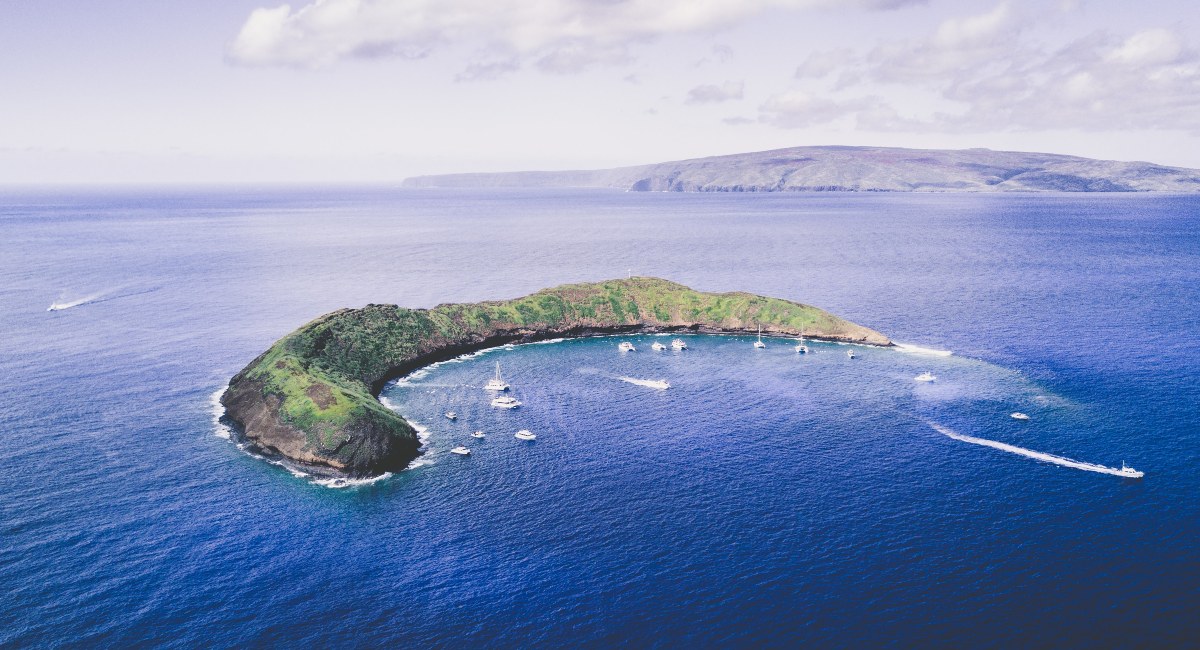
If you’re looking for a truly unique underwater experience, put Molokini Crater on your to-do list. This crescent-shaped volcanic crater sits just off the coast of Maui and is home to an incredible variety of marine life. With crystal-clear waters and visibility of up to 150 feet, it’s a popular spot for both snorkeling and diving.
As you explore the crater, you’ll see colorful fish darting in and out of the coral reefs. Witness graceful sea turtles gliding through the water, and if you’re lucky, even a few sharks swimming in the distance. Don’t forget your underwater camera to capture the unforgettable beauty of this underwater oasis.
Five Caves: A Hidden Gem
If you’re up for a bit of adventure, Five Caves is a must-visit snorkeling spot. Located just south of Wailea, this hidden gem is known for its incredible underwater caves and tunnels, which are home to a wide variety of marine life. Five Caves is known by several names including Five Graves and Nahuna Point.
As you snorkel through the caves, you’ll encounter colorful fish, eels, and even the occasional octopus. The best time to visit is during the morning hours when the water is calm and clear, giving you the best visibility to explore the underwater landscape.
Whether you’re a seasoned diver or a first-time snorkeler, South Maui’s snorkeling and diving spots offer an unforgettable experience of the vibrant and thriving marine life that inhabits the waters surrounding the island. So, gear up and dive into these breathtaking underwater spots.
Water Activities to Enjoy
When it comes to enjoying the great outdoors in South Maui, water activities take center stage. With its infamous turquoise waters, abundant marine life, and breathtaking coastline, it’s no wonder why visitors flock to the area year-round. Whether you’re a seasoned pro or a beginner, there are plenty of water activities to enjoy in South Maui. Here are some of the top options;
Stand-up Paddleboarding: Glide Along South Maui’s Calm Waters
Stand-up paddleboarding (SUP) is a fantastic way to explore the calm and clear waters of South Maui. It’s an easy-to-learn activity, suitable for all ages and skill levels. Whether you’re looking for a real workout, or just want to paddle around and soak up the sun, there’s no shortage of beautiful SUP spots to explore on your board.
For some of the best spots in the area, check out places like Kihei Cove, Wailea Beach, and Makena Landing Beach Park. Make it harder by trying to do a yoga pose on your board, put your balance to the test!
Kayaking: Get Up Close and Personal with Marine Life
Kayaking is another popular water activity that allows visitors to get up close and personal with South Maui’s marine life. You’ll be able to paddle through calm bays and coves, where you can spot sea turtles, dolphins, and colorful fish swimming beneath you. Some of the best spots to go kayaking in South Maui are Makena Landing Beach Park, Ahihi Kinau Natural Area Reserve, and Wailea Beach.
Surfing: Ride the Waves at South Maui’s Best Surf Spots
Surfing is an iconic Hawaiian pastime, and South Maui is home to some of the best surf spots on the island. Whether you’re a seasoned pro or a beginner, there’s a wave to suit everyone in South Maui.
Some of the top surf spots in the area include Cove Park in Kihei, the Point in Wailea, and Big Beach in Makena. If you’re new to surfing, there are plenty of surf schools and rental shops in the area that can help you get kitted out and find your feet on the board.
Whale Watching: Witness the Magic of Humpback Whales
Every winter, humpback whales migrate to the waters around Maui to mate and give birth, making South Maui one of the best places in the world to witness these majestic creatures up close. Whale watching tours are a popular activity from December to April, and there are plenty of options available in South Maui. From the comfort of a boat, you’ll be able to watch as these gentle giants breach, tail slap, and sing their beautiful songs.
Local Eats and Treats: Exploring South Maui’s Food Scene

Let’s explore the mouthwatering world of South Maui’s food scene! After a day of sun, sand, and surf, it’s time to satisfy your cravings with a diverse array of local eats and treats. From top-notch restaurants to irresistible shaved ice and farmers markets, South Maui has it all.
Indulge in South Maui’s Top Restaurants
South Maui boasts a variety of restaurants catering to all tastes, from casual cafes to upscale fine dining. One must-visit spot for any food lover is The Monkeypod Kitchen, serving locally sourced ingredients in a relaxed atmosphere. Their wood-fired pizzas and fresh catch of the day are simply divine.
Gannon’s is another top pick, located at the Wailea Gold Golf Course, with breathtaking ocean views and a menu featuring the flavors of Hawaii. Don’t miss their signature dish, ‘Gannon’s Surf and Turf’.
For a special and intimate dining experience, head to The Restaurant at Hotel Wailea. Their daily-changing menu sources ingredients from local farms and fisheries, and their tasting menu is a must-try for foodies.
Savor the Best Shaved Ice
You can’t leave Hawaii without trying shaved ice! South Maui is home to some of the best spots on the island. Ululani’s Hawaiian Shaved Ice is a local favorite, made with pure cane sugar and fruit purees for a refreshing, natural taste.
Discover Local Farmers Markets
For fresh, locally grown produce, explore South Maui’s farmers markets. The Kihei Farmers Market is open every Saturday and features fresh produce, baked goods, and handmade crafts from local farmers and artisans. Browse the colorful stalls, coffee in hand, and experience all the tastes South Maui has to offer. The Upcountry Farmers Market, in nearby Kula, offers a variety of fruits, vegetables, and locally produced goods.
And for a wider selection of goods, check out the Maui Swap Meet in Kahului every Saturday. From savory to sweet, South Maui’s food scene has it all. Indulge in delicious meals, cool down with shave ice, and savor fresh produce from local farmers markets. Get ready to treat your taste buds to a foodie adventure in this stunning part of Hawaii!
Where to Stay in South Maui

Whether you’re looking for a luxurious oceanfront condo or a cozy beach bungalow rental, there are plenty of great places to stay in South Maui. Here are some of the top options for you to choose from;
Kihei
Kihei is a great place to stay if you’re looking for a more affordable option, perfect for families on a budget. There are plenty of great vacation rentals and affordable condos in Kihei to choose from.
Wailea-Makena
If you’re looking for a more upscale experience, the Wailea-Makena area is the perfect choice. This area is home to some of the most luxurious accommodations with ocean views on the island.
Maalaea
Maalaea is a quiet, laid-back area that’s a great choice if you’re looking to get away from the crowds. There are a few vacation rentals and condos in the area that offer spectacular views of the ocean. It is the perfect place to kick back with a good book and relax with the sound of the waves in your ears – pure serenity!
From beautiful beaches and incredible snorkeling spots, to scenic hiking trails and numerous water activities to enjoy, South Maui truly has something for everyone. Not to mention the variety of great restaurants and accommodations to choose from, it’s the perfect destination for your next vacation.
So what are you waiting for? Start planning your trip to South Maui today and discover all that this beautiful part of Hawaii has to offer!
Some Queries About Vacations in South Maui:
Some of the top beaches in South Maui include Wailea Beach, Makena Beach, and Kihei Beach.
Snorkeling and diving are popular water activities in South Maui, with great spots like Molokini Crater and Turtle Town. Stand-up paddleboarding and kayaking are also popular options.
The Kings Highway/Hoapili Trail is a scenic hike that offer beautiful views of the South Maui coastline.